Wednesday, December 27, 2017

Friday, December 22, 2017

FSU research: 2017 marks new highs for university scientific, creative endeavors

Little concerned with no mention of hard numbers.  FSU has been stagnant with research $$ for a while now.


FSU research: 2017 marks new highs for university scientific, creative endeavors

Florida State University researchers pushed their work to new heights in 2017, engaging in research and creative activity that produced extraordinary work and made international headlines.

Here are some of the highlights of the past year:

FSU HITS RECORD NIH FUNDING
Florida State University researchers brought in record funding of $35.8 million from the National Institutes of Health this past fiscal year. That is more than double the amount the university received five years ago. This positions the university as one of the leaders in the state in health and biomedical research. The university ranked fifth in Florida for funding from the NIH, ahead of heavyweights such as the Mayo Clinic in Jacksonville and the H. Lee Moffitt Cancer Center and Research Institute in Tampa.

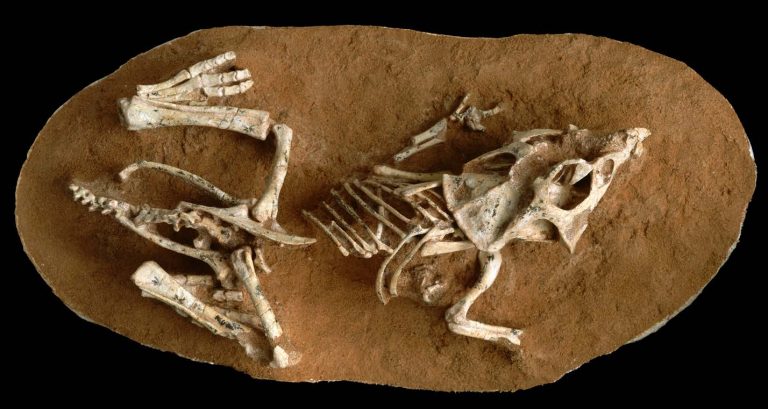
HOW LONG DID DINOSAUR EGGS INCUBATE? RESEARCH SAYS 3-6 MONTHS

Groundbreaking research led by FSU Professor of Biological Science Gregory Erickson found that it took dinosaur eggs anywhere from three to six months to incubate. Using embryonic dental records of these prehistoric creatures, researchers were able to examine the growth lines in the teeth. The implications of this research are considerable. Given that these creatures took a while to reach adult size and had slow incubation times, they would have been at a distinct disadvantage compared to other animals that survived the extinction event.

FSU research says a dinosaur egg will incubate in 3 to 6 months. (Photo credit: Gregory Erickson, FSU)

FSU MAKES WORLD-CLASS HIRES
Florida State continues to push ahead by bringing world-class talent to the university’s labs and classrooms.

In 2017, FSU hired eminent psychologist and National Academy of Medicine member Norman Anderson as assistant vice president for research and academic affairs. Anderson, who has dual appointments in the College of Social Work and the College of Nursing, has been mentoring young faculty and building interdisciplinary programs to enhance existing research endeavors.

The university also hired Lance Cooley, a scientist from the Fermi National Accelerator Laboratory, who joined the Applied Superconductivity Center at the National MagLab this past fall. Cooley is an expert in superconducting materials and is part of a group working on upgrades to the Large Hadron Collider, the world’s most powerful particle accelerator located at the European Organization for Nuclear Research, also referred to as CERN.

In addition, Professor of Biological Science Peter Fraser joined the faculty in January 2017 as the Fowler Professor. Fraser joined FSU from the Babraham Institute, a biomedical research institute in the United Kingdom where he held a variety of research and leadership positions. He also served on the faculty of Erasmus University in The Netherlands.

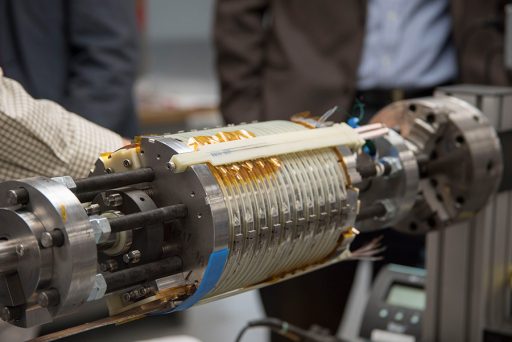
MAGLAB SHATTERS SUPERCONDUCTING MAGNET WORLD RECORD

The FSU-headquartered National High Magnetic Field Laboratory shattered another world record with the testing of a 32-tesla magnet. The new magnet is 33 percent stronger than what had previously been the world’s strongest superconducting magnet used for research and will allow physicists studying materials to explore how electrons interact with each other and their atomic environment to shape our world.

The Florida State University-headquartered National High Magnetic Field Laboratory has shattered another world record with the testing of a 32-tesla magnet — 33 percent stronger than the world’s strongest superconducting magnet used for research and more than 3,000 times stronger than a small refrigerator magnet. (National MagLab)
The Florida State University-headquartered National High Magnetic Field Laboratory shattered another world record with the testing of a 32-tesla magnet.

THINK BRAIN GAMES MAKE YOU SMARTER? THINK AGAIN
Ads tell us you can boost your brain power by playing simple games or using products from a growing brain-training industry. But science says think again. FSU Professor of Psychology Neil Charness and Associate Professor of Psychology Wally Boot found that there is actually little evidence that brain games help preserve or grow cognitive function.

ENCOURAGING TRENDS FOR INFANT MORTALITY
A new study from the FSU College of Medicine found that 18 states are on track to eliminate racial disparities in infant mortality by 2050 if current trends hold. Researchers project that more than 4,000 babies per year could be saved by eliminating racial disparities in these states — gaps that are caused by a wide range of factors including housing and food, economics status, structural racism, insurance coverage and access to health care.

FSU SHAKESPEARE SCHOLAR DELVES INTO EARLY VERSION OF HAMLET
“To be or not to be, that is the question” may be one of William Shakespeare’s most famous lines. Yet, a different version of Hamlet’s soliloquy exists in what scholars consider a first edition of the play, now called First Quarto (Q1) Hamlet. Students from FSU’s Theatre Encounters class performed this early version of the Shakespearean tragedy under the direction of Professor of Theatre Terri Bourus. In this early version, Hamlet is about 18 or 19 years old, said Bourus, who also holds an appointment in English. Bourus is also working with Professor Gary Taylor and the New Oxford Shakespeare project on a volume of all of the early versions of Shakespeare’s poems and plays.

SIX AAAS FELLOWS
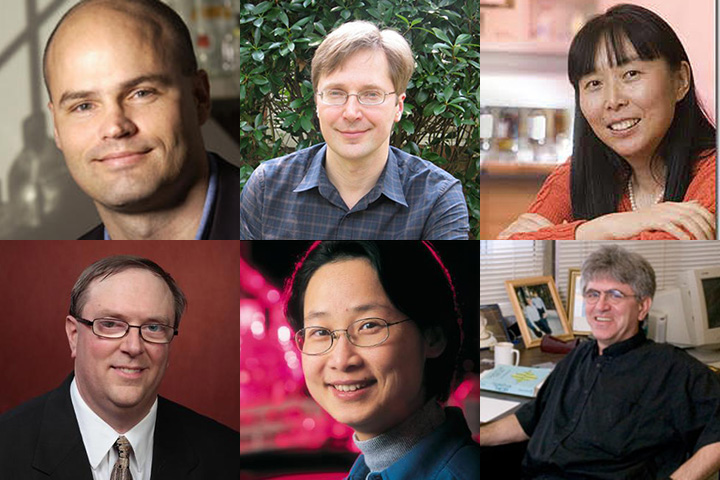
Six FSU faculty members joined the rank of fellow of the American Association for the Advancement of Science. Professors Todd Adams, Igor Alabugin, Thomas Joiner, Hong Li, Efstratios Manousakis and Qing-Xiang “Amy” Sang are among the 296 honorees this year. They join 38 other FSU faculty members who have achieved the rank of fellow since 1957. They will be recognized and presented with an official certificate and gold and blue rosette pin at the AAAS annual meeting in Texas this February.

Thomas Joiner, Igor Alabugin, Qing-Xiang “Amy” Sang, Todd Adams, Hong Li and Efstratios Manousakis are FSU's newest AAAS fellows.
Thomas Joiner, Igor Alabugin, Qing-Xiang “Amy” Sang, Todd Adams, Hong Li and Efstratios Manousakis are FSU’s newest AAAS fellows.

IS YOUR BRAIN A GPS?
New research by FSU Assistant Professor of Psychology Aaron Wilber sheds light on how the brain performs calculations that work a lot like a global positioning system or GPS. Essentially, a part of the brain integrates information from the various senses and helps a person understand what action to take as a result. The response gets recorded as a memory, creating a map of the location that a person can recall to help react to certain situations.

CONFIDENCE, NOT ABILITY HOLDING GIRLS BACK IN MATH PROGRAMS
Assistant Professor of Education Lara Perez-Felkner, in a study published last April, found that when it comes to math, girls regularly mark their abilities lower than boys, even when there is no observable difference between the two. Researchers found this perception gap is particularly wide in upper levels of mathematics where boys rated their ability 27 percent higher than girls did.

Thursday, December 21, 2017

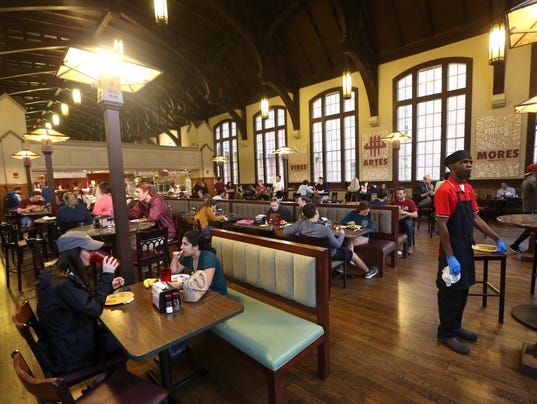
Suwannee Room upgrade


Suwannee Room upgrade


The renovation project is the latest in a series of dining improvements announced at FSU since it signed a 10-year deal valued at $173 million earlier this year with Sodexo.
The Suwannee Room sits in the middle of campus and serves “thousands" of meals daily. The concept will focus on sustainability, health and wellness.
High-tech kiosk ordering systems and table tracking technology will be available for late-night orders.
Students also will have direct access to nutritionists.
It includes an expansion of the “My Zone” station, which will be free of peanuts, tree nuts and gluten — in response to requests by students with dietary concerns.
While the upgrade is underway to meet the needs of today’s students, the room’s noted architectural elements will remain untouched, including its vaulted ceilings.
The current renovation is the first since the facility was reopened in 2006.
The Suwannee Room was originally built in 1913 and served students as a dining hall until the late 1960s, before being turned into office space.

Jimbo quit and other Jimbo idiotic talking points

So couple points. 

#1, Jimbo somehow averaged a top 5 class the last 4 years WITH FSU's facilities.  how is this possible?  #Kirk Herbstreit ?  Anyone?


#2  Others starting to take notice that Jimbo lied about a lot of things, including when he was gone to A&M, and basically was on the FSU payroll but not doing the job.  The only other addition will be that he didn't quit days before he left, but months.


Jimbo quit


Jimbo’s staff flat out stopped recruiting. Taggart will be fine but he can’t work miracles.


Chris Nee on Jimbo

"We have said on this site/board repeatedly that FSU stopped recruiting in earnest from after the weekend of Oct. 20th on."


FSU #6


FSU #3


FSU #3


FSU #4

Tuesday, December 19, 2017

FSU and UF donors filed now-combined class action lawsuits contending the state's failure to provide matching funds


University of Florida graduates and Florida State University donors filed now-combined class action lawsuits contending the state's failure to provide matching funds


Lawyers for the state argued Monday that courts cannot compel the Legislature to provide matching funds for $460 million in private donations to Florida universities and state colleges.

Asking for a lawsuit to be dismissed, Andy Bardos, representing the Florida House and Senate, said the separation-of-powers doctrine prevents a judge from ordering the Legislature to come up with more than $600 million under Florida's matching-gift laws, which have been suspended since 2011.

"What they seek is an order commanding the Legislature to appropriate funds in the future. We contend, your honor, this is beyond the power of the court," Bardos told Circuit Judge Charles Dodson in a Leon County court hearing.

University of Florida graduates and Florida State University donors filed now-combined class action lawsuits contending the state's failure to provide matching funds for programs has undermined educational opportunities and violates a contractual obligation between donors and the state. The programs pay for new campus facilities and scholarships.

"They created these statutes to encourage giving. And they were massively, massively successful," said Grace Mead, a lawyer representing the FSU donors and UF graduates. "Were they a private party, not only would we be here suing for breach of contract, we would be suing for fraud."

Facing a tight budget during the recession, the Legislature cut back on funding for the matching-grant programs and then suspended the initiatives in 2011.

The programs include two construction-related funds, the Alec P. Courtelis University Facility Enhancement Challenge Grant Program and the Florida College System Institution Capital Facilities Matching Program, as well as the Dr. Philip Benjamin Matching Grant Program and the University Major Gifts Program.

Under the 2011 law, the programs cannot be restarted until a backlog of $200 million in donations for the Courtelis program and the other three matching-grant programs have been matched.


But Jordan Pratt, a deputy solicitor general with the Attorney General's Office, said the contract claim is flawed because the agreement was between donors and the university or state college and not the Legislature.

He said there is no legal precedent for someone contracting with one state agency and then suing "an entirely distinct agency."

Dodson questioned the state lawyers closely about their claim that despite the matching-grant laws there was no obligation by the state to fund the programs.

If the funding is discretionary, Dodson asked: "Why did they need to do a suspension?"

Bardos said the suspension, which took place on June 30, 2011, "put people on notice" that future donations may not be matched and argued that the Legislature has the sole discretion to fund or not fund the programs.

Mead said the matching-gift laws are not discretionary.

"If that were true, the statutes would have said the state has no obligation to match a single dollar contributed by a single donor for a single college or university program," she said. "They don't come close to staying that."

Mead said statutes spell out the need for the scholarship and building programs, and the statutes collectively use the "the words shall or must" 76 times.


"Absent the obligation to match, it has no incentive. It's not simply a tracking program." Mead said. "It is in fact a command to match."

Dodson gave the lawyers for the state and the matching-gift proponents until Jan. 5 to file proposed orders in the case. His ruling will come sometime after that.