Showing posts with label Seminole Boosters. Show all posts

Tuesday, July 28, 2026

Seminole Boosters announces record breaking fundraising year


Seminole Boosters announces record breaking fundraising year 

Florida State athletics and Seminole boosters announced a record-breaking year of fundraising for the program, with $106 million in pledges and $86 million in cash contributions.

The news was announced in a press release sent out by the university. The fundraising efforts come after the university renovated Doak Campbell Stadium and constructed a new football-only facility that sits over 150,00 square feet and cost over $400 million.

The 2026 fiscal year also saw the Seminoles program reach 600 Bowden Society members, a group of individuals recognized for commitments of $50,000 or more. Contributions rose from $3 million to $11.1 million for the Seminoles Coaches Club, a 270% increase. The Coaches Club allows boosters to directly donate to a sport of their choosing.

Seminole Boosters fundraising highlights

Information provided by FSU

  • Record-Breaking Fundraising Performance
  • Received more than $106 million in pledges, the highest total in Seminole Boosters history.
  • Generated $86.3 million in cash contributions, an all-time organizational record.
  • Delivered one of the most successful fundraising years in organizational history through broad-based donor engagement and support.
  • Secured two transformational bequests, each exceeding $10 million, highlighting the continued growth and impact of legacy giving.
  • Increased the diversity of support through a broader mix of donors, gift types, and giving vehicles.
  • Leadership Giving Growth
  • Reached 600 Bowden Society members, representing 15.6% year-over-year growth.
  • Continued to strengthen FSU Athletics' premier leadership-giving society and major gift pipeline. More than 90% of Bowden Society members are first-time major gift donors.
  • Expanded engagement among high-capacity donors through enhanced cultivation and stewardship efforts.
  • Coaches Club & Sport-Specific Giving Success
  • Coaches Club giving grew from $3 million to $11.1 million, a 270% increase year-over-year, representing one of the most significant growth stories across Seminole Boosters fundraising initiatives.
  • Generated increased donor investment across multiple athletic programs.
  • Transformational Facilities & Program Investments
  • Opened the Renovated Doak Campbell Stadium, creating a best-in-class experience for fans, donors, and student-athletes.
  • Opened the Dunlap Football Center (DFC), further enhancing recruiting, development, and student-athlete support.
  • Launched Women's Lacrosse, while continuing investment in facilities and program development.
  • Organizational Growth & Innovation
  • Launched the Seminole Business Network (SBN), creating a new platform for business engagement and support of Florida State Athletics.
  • Expanded national fundraising reach through the out-of-market initiative, strengthening Seminole Boosters' presence in key growth markets, continuing to broaden the organization's donor base and national footprint.

Monday, November 13, 2023

Honoring former Seminole Boosters President & CEO Andy Miller with the Langford Award


Honoring former Seminole Boosters President & CEO Andy Miller with the Langford Award


Tuesday, September 5, 2023

Total cumulative "Donations/Contributions" 2005-22; Per USAToday/Knight Commission


Thursday, July 6, 2023

Final numbers for the 2022-23 Seminole Boosters Annual Fund


Final numbers for the 2022-23 Seminole Boosters Annual Fund

Our yearly goal was $19,000,000 which seemed like a huge number this time last year after the last 4-5 years. Our year runs from July 1 to June 30. We finished at $19,089,000. Also a great year in facility fund raising. Between us hitting that goal and a 4 day weekend there's a lot of happy folks in the Booster organization. Thank you to all Seminole Boosters for your support!

If you would like to support Seminole Athletics and help in the climb contact me at jwarren@fsu.edu.


What is annual fund?

It's our Iron Arrow, Renegade, Warrior, Tomahawk SilverChief, Golden Chief, Platinum Chief, Legacy Chiefs levels. Most boosters are Annual fund boosters but some just give to coaches club, scholarships and facilities. It's a unrestricted fund that has benefits, the money is the lifeblood of the program. It pays shortfall in endowment, a transfer to athletics to help with their costs, pays salaries and basically keeps the lights on. If you are not an annual fund donor give me a call


How many boosters are there?

Almost 13,000. 12.98K is what our board reads. We are in a campaign to get back to 20,000. 20 for 20, 20,000 donors for 20 sports.


Per the iptay website, Clemson has 18,720 boosters


Wednesday, February 15, 2023

FSU Booster #s & History

https://www.youtube.com/watch?v=HCoh8WMZ_O4

FSU AD Alford notes FSU has the most living alumni in the ACC (375K), 50k more than UNC.  But it's only 6th or 7th in the number of boosters in the ACC.

https://floridastate.forums.rivals.com/threads/booster-memberships.344375/

Jerry Kutz 2/6/2023

I received a brochure in the mail this week that put the current number at 12,410 members for 2022.
The brochure also said only 82 percent of members renewed in 2022. That's not good. You need a 90 percent renewal rate to grow or you have to sign up a lot more new members than the 2081 first-year members reported they added. That's a good number of new members but if you are only able to renew 82 percent, you are not even treading water with 2,081 new members.

Here's the math: If they had 12,600 in 2021 and renewed 82 percent, that means they renewed 10,361 members. Adding 2,081 new members brought them to 12,410, which is less than the 12,600 they had in 2021.

Little history: The most members the Boosters ever had was 21,000 back in 1987. When I was the annual fund manager, we hit 19,000 but that was back when Bobby was winning, back when you could be a Booster for as little as $25.00 and back before three ticket-priority policy changes that chase off season ticket holders and donors.

How many members you have is directly correlated to winning at Florida State (and probably most places.)

Towards the end of the Bowden era, when FSU was no longer contending for the National Championship, the number of Boosters fell from 19,000 to 10,000... and season tickets fell from 41,000 to 20,000, inspite of the fact athletics and the Boosters were spending just as much time and money marketing Boosters and tickets as they were when they had 19,000 Boosters and 41,000 season ticket sales (about 10,000 buyers).

Going into 2013, FSU had grown the season tickets back to a respectable 30,000 with about 13,000 Boosters. FSU won the national championship and the next year season tickets went back to 40,000 and the Booster memberships bumped up too...

Winning matters. The Booster office tells me season ticket sales are well ahead of last year and that Booster memberships should be higher in 2023.

I think fans are happy and hopeful, which they have not been in years. If they are, then the renewal rate will climb back to 90 percent, where it needs to be to grow, and you'll see new people join and buy season tickets.

The most impressive number on the brochure I got was that 37 percent of Booster members are not season ticket holders. That's a record I believe at FSU. The best I remember during my tenure was 30 percent and that was considered remarkably high as most schools had fewer than 10 percent donate without doing it to get season tickets.

One last point: Those numbers (12,410) count only annual fund donors. There are probably 1,000 capital campaign or coaches clubs donors who are not counted in the 12,410 as they don't give to the annual fund too.

Friday, January 13, 2023

AD Alford Updates

 https://floridastate.rivals.com/news/michael-alford-knows-importance-of-featuring-powerful-fsu-athletics-brand


Back in the heat of college football realignment talk last July, Alford shared a Fox Sports graphic which ranked FSU 14th among the most valuable college football programs at $96 million. Among non-SEC or Big Ten programs, FSU tied for second with Oregon behind only Notre Dame.

Last November, Alford showed the FSU Board of Trustees a graphic while addressing them that put the FSU brand into perspective with the best programs in the SEC and Big Ten. While FSU and the ACC have a much smaller television contract relative to those conferences, Alford’s research showed that FSU matches up well if you pull out the television revenue that schools get from their conference.

Using each athletic department’s 2019 revenue numbers if television revenue were not factored in, FSU athletics’ $111.8 million would rank third in both the SEC (behind Texas A&M and Georgia) and the Big Ten (behind Ohio State and Michigan). FSU’s 2019 revenue mark without television factored in was well above the average for SEC schools ($94.5 million) and Big Ten schools ($86 million).

More research that Alford did showed that between 2014 and 2021, FSU was the No. 1 ACC team in terms of regular-season football viewership. Suffice it to say, that wasn’t the best period of success in FSU football’s history. And yet still, FSU was doing better television numbers than a lot of teams having more success, including one which won a pair of national titles in that span.

That FSU was still the most-watched ACC team even through its most extended period of struggles since the 1970s shows FSU’s lasting value as a brand. However, football performance is still important with realignment capable of popping up once again at any moment.

That makes FSU’s 10-3 2022 record, far and away the Seminoles’ best football season since 2016, critically important. It shows that FSU isn’t just a college football brand relying on success from decades ago to stay relevant like Nebraska, but that FSU can be great once more.

With FSU and Clemson representing 24% of the ACC’s media value at the moment according to Alford, it’s clear the role that football success has in today’s age of college athletes.

“That's the one driving the eyeballs. Right or wrong, when you look at what ESPN or any media agreement values, they're going to look at TV viewership, they’re going to look at TV households, they're gonna look at football performance and they're gonna look at basketball performance. That's what they pay you for,” Alford said. “Right or wrong, that is how they break down what it is and what the media distribution is and what the media TV contract is. That's why it's so important to keep those brands relevant across the country, not only at Florida State but amongst the ACC. We talk about it internally all the time that we need to constantly look at our marquee brands within our own conference and how do we showcase those more…

“(FSU and Clemson) are the marquee brands within this conference and have been across this timeframe so we need to make sure those two brands are being out in the forefront.”


https://floridastate.rivals.com/news/column-as-fsu-football-ascends-athletics-juggles-complex-issues

By Florida law, public institutions cannot use taxpayer money to fund athletics, including athletics facilities. The FSU athletics department must operate on a balanced budget, supplemented by Seminole Booster annual donations (typically about $17 million each year). The state of Florida also prohibits the university from funding facilities, so FSU athletics looks to Seminole Boosters to raise the money to build its facilities and to make payments on existing facility debt (about $10 million) each year.

The Seminole Boosters annual fund currently has just over 13,000 members who donate $70 to $25,000 per year to an unrestricted fund, which the athletics director can use to fund any aspect of the athletics budget. Those Booster members receive a variety of benefits, including ticket priority for season tickets, and why Booster revenues rise and fall with how many tickets Seminole fans buy. Booster membership has ranged from a high of 19,000 members to less than 10,000 in recent years. The Boosters also raise money exclusively for capital projects (facilities) and scholarship endowments as well as operate revenue-generating enterprises.

https://floridastate.forums.rivals.com/threads/fsu-not-committed-to-football.343883/

According to our AD Michael Alford: "when you look at the history, we went back and looked at 10 years of making a commitment to that program. We were dead last in the ACC in terms of our percentage of commitment to football. That’s not Florida State. You look back and say, “OK, why are we in the position we are in?” And look at the analytics of it. That’s one of the reasons. There were a lot of other reasons, but one of them was we hadn’t made that commitment to that sport".


Jerry Kutz

Yes. It will need to be a story, not a post. I have a great deal of faith in Michael Alford so I want to clarify what he meant in those quotes referenced. My experience from 2000 to 2019 was that FSU invested the vast majority of any money it generated by ticket sales or raised by fundraising in football so I'll need to ask him more about the quantitative analysis.

Here's the cliff notes on what I experienced.

Part 1: Alford mentioned other factors. One was money to invest.
Alford will tell you that ticket sales and annual fund contributions tied to those ticket sales generate the vast amount of the revenue an athletic director needs to commit to any sport. And I think what he meant by "other factors" was this: FSU enjoyed only one sold out season in those 10 years (2014) and seven of the worst years in ticket sales history, including two Covid-affected seasons.
By my quick calculation, FSU had $70-$130 million less to invest than it could have had if they had normal sales of 30k to 40k season tickets.
And the absence of that revenue will put any grand plans the department has on hold.
Let me remind you why tickets sales went down: Many FSU fans boycotted ticket sales at the end of the Bowden era, so ticket sales fell from 42k to 20k and the Booster contributions tied to those tickets fell with them. A reduction of 22k tickets at $330 each is $7.26 million per year and the loss of annual booster money tied to those seats is another $7 million. Add it up and you've got $14.26 million less to invest EVERY year.
FSU sold 30k in 2013, sold 40k in 2014 and gradually fell back to 20k by 2018. 2019 was a Covid bust. 2020 and 2021 were covid affected at 20k.

By way of reference, Seminole fans bought just over 28k season tickets for this past 2022 season, which one would think would grow over 30k on the heels of a 10-win season and the team coming back.
And, least we forget, the previous AD also had to pay Taggart's buy out.
All of those factors played into how much money FSU had to invest. Hopefully, ticket sales and Booster contributions will rise to the level they need to be for Alford to be able to make the necessary investments.

Part 2: At least $150 million was spent on football projects alone
In spite of a reduction in ticket revenue and annual contributions, Seminole Boosters' capital campaigns raised a lot of money for football projects -- more than $125 million -- built football facilities, including: the Indoor Practice Facility ($20m), the practice fields ($5 m), $10m on rebuilding the locker rooms and coaches suites (twice in 10 years), the weight room, the players lounge, another $20m on mandated Doak Campbell structural renovations and coating, $60m to build the champions club, which pays for the structural renovations and coating and generates ongoing revenue for athletics and $15 million on scoreboards and ribbon boards.
Yes, there were projects built for other sports, but none of them were the magnitude of football.
During the Jimbo era, FSU greatly expanded the size of the football staff, coaches salaries, recruiting budget, etc from what it had been but not like what football staffs have today.

Part 3: Others were investing too
During those years, we saw the ACC investing money in their football programs in order to catchup to what Florida State had built the decade before and in some cases leapfrog Florida State. That was the ACC's decade of growth as they needed to expand their football stadiums, build skyboxes and club seats and get caught up on football facilities. So, it would not surprise me if they spent more in that decade than did Florida State..
I think the one facility they built that FSU has yet to build, was the football operations building. They leap frogged Florida State in terms of football operations buildings during that time as they replaced antiquated facilities.


Again, this is more suited to a story than a post but here's a condensed answer.
The ticket prices were always pretty comparable. What was not equal was the contribution requirement to maintain seats in various sections of the stadium. FSU's donation requirement was 25 percent of what the average SEC and ACC school were requiring section by section. Even after FSU approved two increases over the next 10 years, FSU"s policy hadn't reached 50 percent of what ACC and SEC schools were requiring for contribution. The last policy increase FSU did was 2018, right before I retired from the Boosters, so they are overdue for another adjustment. Alford and I talked about it yesterday that donors prefer smaller, more-frequent increases than sudden, larger increases. He knows most schools he's been at do it routinely every three to five years. By my count, FSU has adjusted the policy three times in 22 years so it's time.

Here's a longer answer with details:

We did extensive SMA studies and focus groups before the athletic director and athletic board would approve the increases as demand for seats in Doak are traditionally soft (more on that later) so our first increase in 25 years was surgical. We increased the contribution requirement in Priority 1 more (highest demand) by slightly more than what we increased the requirement in Priority 2. We also had a Priority 3 area, which had no contribution requirement, which was very unusual among schools.

Each time FSU had an increase, we generated more revenue but we also lost a portion of our local season ticket base who felt we priced them out of Doak. This was a real concern going in as the household income in Leon County was $40-45,000 and surrounded by seven of the poorest counties in the state. We found very few people who didn't want to pay the extra contribution were willing to move to a lower priority area.

I haven't done an SMA study since 2015, when we did the planning for the Champions Club, but I'm certain FSU faces the same supply/demand/location challenges today that make increasing the contribution requirement challenging.
- household incomes in the Big Bend area are largely set by state salaries and haven't increased proportionally
- where UF, Clemson, Auburn draw from more than 10 million people within 150-mile drive, Tallahassee drew from less than 1 million (now 2 mil). I studied every stadium. Alabama is about the only campus I could find that didn't have 8-10 million people within a three hour drive, and Tuscaloosa has almost 6 milion, three times what FSU draws from.
- because 70 percent of our ticket base lives more than 3 hours from Tallahassee, there is a tremendous dependence on hotel rooms and frankly there aren't many in Tallahassee or in surrounding communities, therefore the price of those hotels and the two-night minimums became a real cost of tickets to our out-of-town fans
- Coach Bowden felt the need to have an 80k seat stadium in order to compete for recruits with SEC schools and FSU has not been able to consistently fill it. FSU started "right sizing" the stadium with the Champions Club, which reduced capacity from 83k to 78k. The changes Alford proposed and FSU is selling would take Doak down to 65k, which is what it needs to be given hotels, roads, parking and demand.
- Television has been another huge factor. You old folks will remember the day when if you wanted to see FSU play, you had to come to Doak as televised games were rare. Now they are all televised and most of our fans prefer to stay home and watch it on television. It's a profound paradigm change.


What FSU and its fan base can do right now is look ahead so as to capitalize on an improved football team by getting the season football ticket base back to 40,000 and to get its Seminole Booster donor base back to 19,000, which it was in the 1990s. This administration, and this generation of Seminole fans, can do it because it has been done before.
FSU currently has less than 30,000 season ticket holders and 13,000 Seminole Booster members. FSU fans have been waiting to see the product get better and now that it has, the focus should turn to how to sell out Doak and hit the Boosters stated goal of 20,000 members. Do that and FSU adds $10m dollars to the athletics budget it doesn't have right now.

Friday, July 8, 2022

$5.6 million pledge to @FloridaState which will support the College of Business, College of Education, Presidential Scholars and Seminole Boosters.


Thursday, April 7, 2022

Annual Fund, football season tickets Update


Annual Fund, football season tickets Update

Alford said FSU has sold 18,000 season tickets with a renewal rate of nearly 68 percent, its highest mark since 2016.

Additionally, Alford and Seminole Boosters Inc., where he served 18 months prior to replacing retiring David Coburn as Vice President and Director of Athletics, are working diligently to rebuild the Annual Fund.

The fund, which currently has 8,389 donors with a goal to reach 13,500, provides athletic scholarships to more than 500 student-athletes. There's also an emphasis on connecting with 45,000 local FSU alumni, of which a mere 2% donate to athletics. 

His management style also recently raised eyebrows when veteran women's soccer coach Mark Krikorian suddenly resigned on March 29. The three-time national champion coach announced his decision through the local media and not through FSU's communication channels.

Alford's leadership staff is undergoing changes, too. Vanessa Fuchs, the department's veteran associate athletics director, left to become the new CEO of WeCOACH. 

Regardless, Alford is determined to give FSU's student-athletes, coaches and the department the tools and resources to be successful. Agenda items include:

- Resurfacing fields in soccer, softball, and baseball. 

- Adding video boards to softball and soccer.

- Examining adding premium seating to softball and looking to update the volleyball locker room.

- Added sixth court to beach volleyball for practice and competition.

- Modernizing the basketball office recruiting path.   

ANNUAL FUND NUMBERS 

2015: 14,434

2016: 15,033

2017: 13,805

2018: 13,320

2019: 11,662

2020: 9,448 *Due to COVID-19, donors could receive a refund or roll-forward their purchase).

2021: 12,007

2022: Currently 8,389 with a goal of 13,500

MORE ON 2022 MEMBERS

- 1,165 members have singed up for 2022 who were not members in 2021

- 2,029 members live in the Tallahassee area (2022 goal is 3,500)

- More than 2,000 local members have not yet renewed for 2022 but were members in 2021


SCHOLARSHIP COSTS BY SPORTS 

Athletic scholarship are one of the largest areas costs supported by Annual Fund donations. Below are those costs by team for this fiscal year. This includes tuition, room/board, books, and cost of attendance. It’s also important to note, the university does not provide discounts or waivers for student athlete tuition. The athletic department pays full price.

Baseball: $557,262

M. Basketball: $782,038

Football: $4,029,229

M. Golf: $158,583

M. Swimming: $446,886

M. Tennis : $227,761

M. Track: $626,274

W. Basketball: $810,006

Softball: $538,929

W. Golf: $249,361

W. Swimming: $724,557

W. Tennis: $398,738

W. Track: $959,048

Volleyball: $540,633

Sand Volleyball: $248,728

Soccer: $618,930

TOTAL: $11,916,961

Monday, April 4, 2022

Now is the time for Tallahassee to leverage CollegeTown’s economic benefits


Now is the time for Tallahassee to leverage CollegeTown’s economic benefits

What was once several city blocks of warehouses and empty lots is now one of the most popular destinations for college students and young professionals in Tallahassee.

The story of how this older section of the city transitioned into a premier urban location called CollegeTown is complex. But its history also points to avenues for improving the value of this thriving part of Tallahassee. 

Starting with the revitalization of the Gaines Street corridor, the CollegeTown area was initially envisioned by developers as a place where students and alumni could come together. CollegeTown does precisely this by providing a wide range of amenities – making it a favorable place for students to live, eat, and play.

Within walking distance of Florida State University’s campus and a short drive from Florida A&M University, CollegeTown’s location is its most sought-after amenity.

Since CollegeTown’s completion in 2013, property values have skyrocketed.  In the years prior to the development, combined warehouse property values in the area were all less than $1 million.

Those numbers are much higher now according to our analysis in the DeVoe L. Moore Center in the College of Social Sciences and Public Policy at Florida State.

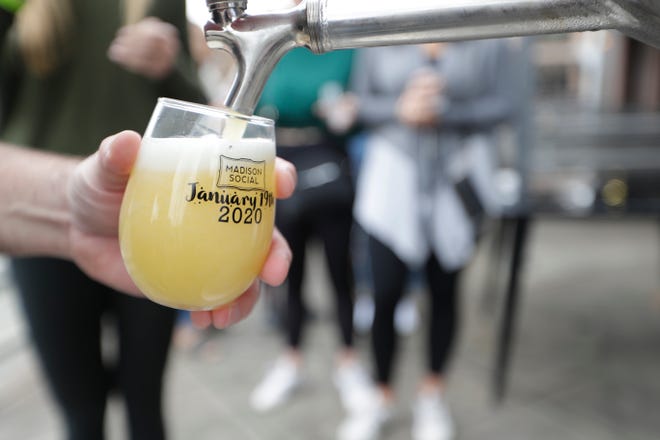
Madison Social

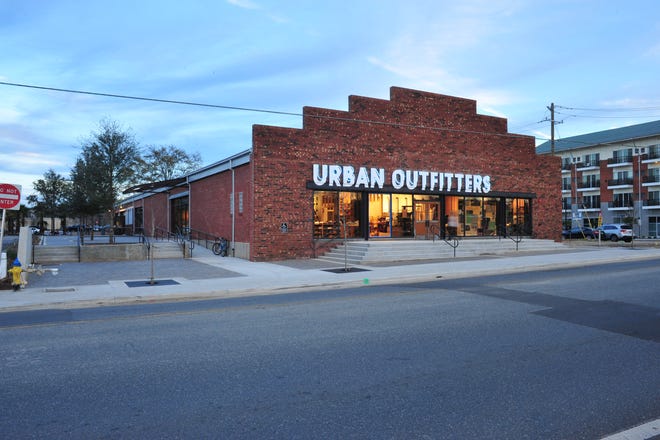
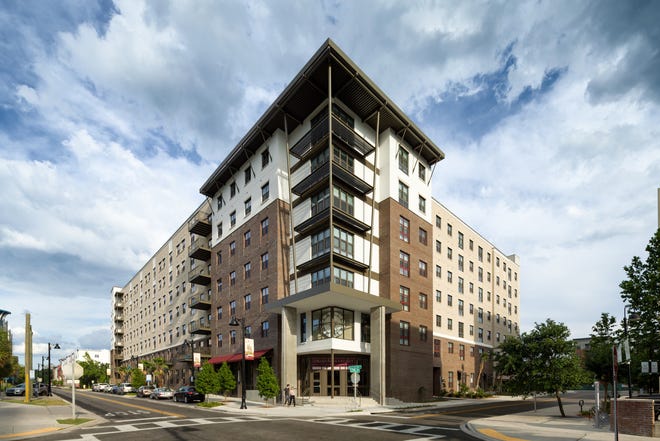
According to the Florida Department of Revenue, the value of the land that houses popular restaurant Madison Social, is around $1.8 million. The Catalyst Apartment building is worth about $32 million, and the building that rents to Urban Outfitters is just over $1.8 million.

Urban Outfitters renovation completed in 2013, located in Tallahassee, Florida

Total property values in the CollegeTown area in 2019 exceeded $861 million, nearly double its worth of $489 million in 2006.

The development makes great use of space by incorporating a variety of mixed-use buildings. Property owners use these buildings to their advantage with three different phases of “CollegeTown Apartments” above commercial spaces for restaurants and shops. Mixed-use buildings help provide different income streams for investors with the ability to collect commercial and residential rent. These mixed-use buildings also increase property value.

Madison Social Owner Matt Thompson pours out the first glass of the 3,000-ounce "Tallahassee's largest mimosa," the unofficial world record, at the CollegeTown bar Sunday, Jan. 19, 2020.

Clearly, CollegeTown has made a sizable return on investment for all parties involved in its development.  

While CollegeTown has had great success socially, economically, and aesthetically for the city of Tallahassee, incorporating a few additional elements could improve it as a regional destination for families, students, and alumni. 

For example, the introduction of a park would accentuate the walkability of the area while creating visual appeal and a pet-friendly area for residents. This addition could increase the property value of surrounding buildings and apartment rental prices. 

Collegetown Phase III built in 2018, located in Tallahassee, Florida

Attracting national retail brands following in the college student demographic, such as Lululemon or Sephora, would complement the local boutiques that are already present and add more demand to the retail market for college students. 

These improvements could further increase community engagement and make CollegeTown a go-to destination for visitors and strengthen an already crucial asset to Tallahassee. 


Monday, March 7, 2022

Total Revenues by School (updated with breakdown by sport not sure of year)


Total Revenues by School

Reporting Year: 07/01/2019 - 06/30/2020

Total Revenues by School

001.) Ohio State University - $225,542,037
002.) The University of Texas at Austin - $191,737,849
003.) The University of Alabama - $189,242,298
004.) University of Georgia - $179,295,904
005.) University of Michigan-Ann Arbor - $168,244,643
006.) University of Notre Dame - $165,660,298
007.) Pennsylvania State University - $165,077,390
008.) Louisiana State University and Agricultural & Mechanical College - $160,460,476
009.) University of Oklahoma-Norman - $157,494,530
010.) Florida State University - $155,656,855

011.) Auburn University - $153,703,749
012.) University of Iowa - $145,095,544
013.) University of Wisconsin-Madison - $143,954,553
014.) Texas A & M University-College Station - $143,807,835
015.) University of Louisville - $140,867,112
016.) University of Florida - $139,287,811
017.) University of Kentucky - $138,492,743
018.) University of Washington-Seattle - $137,573,939
019.) University of South Carolina-Columbia - $137,094,212
020.) The University of Tennessee-Knoxville - $136,807,801

021.) Stanford University - $133,622,625
022.) University of Nebraska-Lincoln - $128,185,606
023.) University of Southern California - $127,801,994
024.) University of Arkansas - $124,297,763
025.) Michigan State University - $122,557,963

Atlantic Coast Conference

01.) Florida State University - $155,656,855
02.) University of Louisville - $140,867,112
03.) Clemson University - $122,263,031
04.) University of Miami - $115,360,535
05.) Duke University - $109,785,804
06.) University of North Carolina at Chapel Hill - $107,842,595
07.) University of Virginia - $106,985,487
08.) University of Pittsburgh - $99,763,877
09.) Virginia Polytechnic Institute and State University - $98,885,805
10.) North Carolina State University at Raleigh - $88,656,510
11.) Boston College - $87,003,060
12.) Syracuse University - $86,415,599
13.) Georgia Institute of Technology - $86,407,600
14.) Wake Forest University - $84,486,746


Is this just football revenue, or total revenue just for football schools?
According to Porcine's link, it's total.


FWIW, I always wonder about the "Equity" data because apparently it includes student fees and transfers as 'revenue'. I like seeing that broken out.

For example, looking at FSU's data, the "Equity" database says FSU had $155m in revenues and expenses that year. The books balanced perfectly, revenues equaled expenses.

But, this article says that FSU actually had $129m in operating revenues, leaving it with a $26m operating deficit. I find that information more enlightening.

https://www.tallahassee.com/story/sports...283842001/


Reporting Year: 7/1/2019 - 6/30/2020 for most teams and determines conference affiliation, 01/01/2019 - 12/31/2019 for BYU. FBS teams only. Service Academies N/A.

School

* Indicates Caveats

Football

Revenues

Men's

Basketball

Revenues

Women's

Basketball

Revenues

Total Revenues

of all Sports,

Except Football

and Basketball,

Combined

Not Allocated

by

Gender/Sport

Grand Total for

all Teams

(includes by team and not allocated by gender/sport)

Grand Total

Revenues

Minus

Grand Total

Expenses

Ohio State*

$115,510,031

$22,020,260

$790,523

$7,213,785

$80,007,438

$225,542,037

$36,443,543

Texas

$144,426,105

$13,322,731

$1,886,797

$8,387,907

$23,714,309

$191,737,849

$42,238,488

Alabama

$110,110,211

$14,722,223

$1,008,558

$9,712,801

$53,688,505

$189,242,298

$39,475,003

Georgia

$134,463,859

$9,651,731

$933,372

$3,818,163

$30,428,779

$179,295,904

$50,219,807

Michigan

$125,773,306

$17,759,785

$403,614

$6,057,512

$18,250,426

$168,244,643

$11,561,645

Notre Dame

$97,944,469

$3,926,701

$1,371,293

$6,520,098

$55,897,737

$165,660,298

$6,859,105

Penn State

$101,678,317

$10,527,187

$1,141,826

$23,579,585

$28,150,475

$165,077,390

$16,155,028

LSU

$95,063,116

$8,760,820

$380,518

$4,606,339

$51,649,683

$160,460,476

$4,869,420

Oklahoma

$101,881,969

$8,477,462

$2,064,744

$11,612,368

$35,080,195

$159,116,738

$1,622,208

Florida State

$71,102,595

$13,061,863

$6,035,984

$25,713,642

$39,742,771

$155,656,855

$0

Auburn

$97,665,511

$12,258,411

$241,272

$2,853,148

$40,685,407

$153,703,749

$24,113,382

Iowa

$81,421,937

$11,163,105

$1,033,612

$3,980,632

$47,496,258

$145,095,544

$29,074,407

Wisconsin

$87,408,161

$19,453,045

$984,485

$16,486,987

$19,621,875

$143,954,553

$6,489,470

Texas A&M

$78,052,665

$14,755,380

$926,533

$4,829,945

$45,243,312

$143,807,835

$7,479,849

Louisville

$48,923,931

$40,684,042

$1,493,218

$1,067,496

$48,698,425

$140,867,112

$2,036,943

Florida

$94,905,944

$11,061,415

$182,422

$3,371,956

$29,766,074

$139,287,811

$0

Kentucky*

$44,541,081

$29,307,070

$426,694

$2,033,623

$62,184,275

$138,492,743

$189,741

Washington

$91,704,081

$12,459,010

$1,465,644

$10,745,828

$21,199,376

$137,573,939

$22,290,291

South Carolina

$69,255,386

$10,267,956

$3,089,470

$5,400,840

$49,080,560

$137,094,212

$0

Tennessee*

$91,615,408

$16,899,321

$3,184,798

$2,337,608

$22,770,666

$136,807,801

$0

Stanford

$40,933,017

$7,768,928

$2,365,008

$8,624,295

$73,931,377

$133,622,625

$0

Nebraska

$95,848,584

$13,517,159

$1,501,609

$5,655,566

$11,662,688

$128,185,606

$13,046,957

Southern California

$53,380,160

$6,540,372

$2,952,488

$23,915,519

$41,013,455

$127,801,994

$0

Arkansas*

$70,283,699

$18,727,503

$625,151

$5,725,632

$28,935,778

$124,297,763

$0

Michigan State*

$68,942,427

$20,211,332

$77,137

$4,527,658

$28,799,409

$122,557,963

$0

Clemson*

$63,120,884

$9,308,562

$1,601,450

$11,029,969

$37,202,166

$122,263,031

$0

Indiana

$56,453,582

$25,140,266

$362,492

$1,106,019

$37,423,339

$120,485,698

$12,025,247

UCLA

$37,548,589

$11,036,275

$902,912

$7,003,117

$62,900,538

$119,391,431

$0

Miami (FL)

$59,453,410

$9,209,237

$5,734,665

$20,441,299

$20,521,924

$115,360,535

$196,090