Showing posts with label Academic Resources. Show all posts

Tuesday, July 28, 2026

Florida State University records historic year of philanthropy and impact


Florida State University records historic year of philanthropy and impact

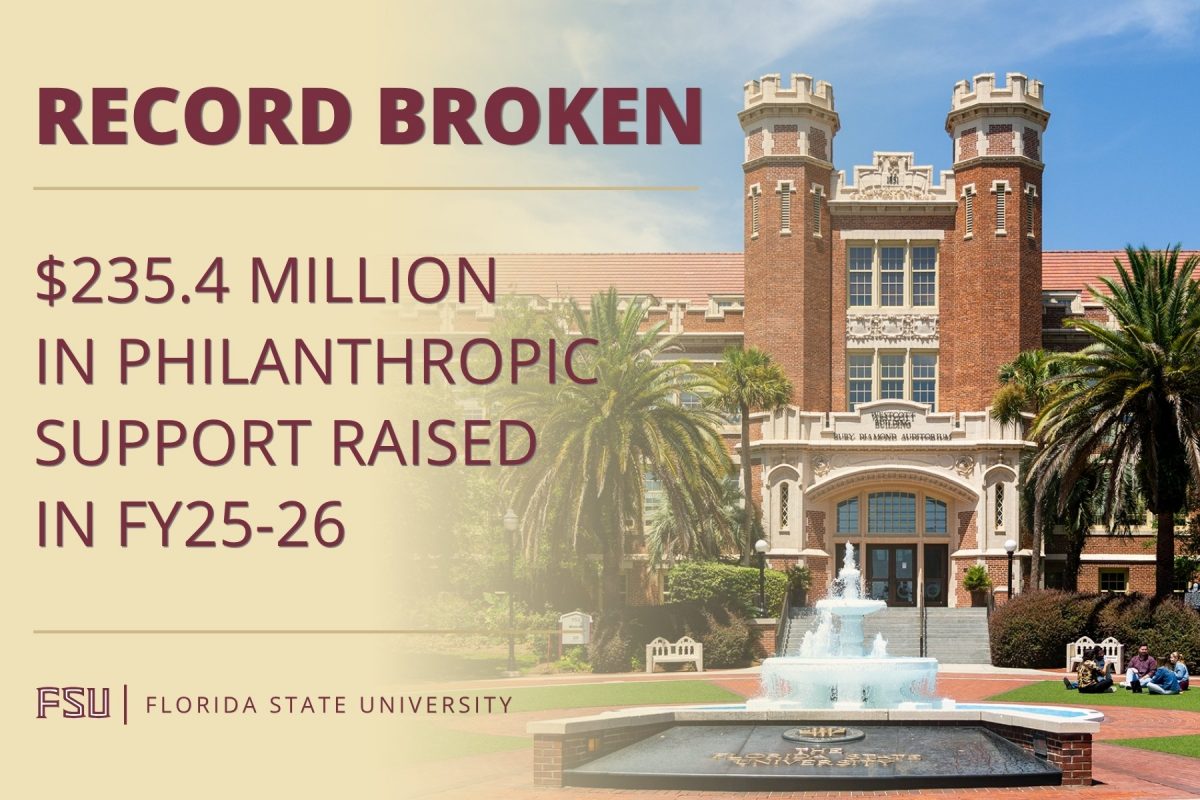
A graphic on the record philanthropic giving with a group of people sitting in front of the Westcott building by the fountain

Florida State University recorded the most successful fundraising year in its history during the 2025-26 fiscal year, with alumni, parents, faculty, staff, friends and partners contributing a record $235.4 million.

The total surpassed the university’s previous fundraising record of $225 million, set in 2015-16, led by a $100 million gift from Jan Moran and The Jim Moran Foundation.

The record-breaking total includes philanthropic support raised through the FSU Foundation, Seminole Boosters, Research Foundation, Alumni Association and The John and Mable Ringling Museum of Art. These investments support FSU’s strategic priorities leading to FSU’s powerful impact across Florida and beyond.

“This record-setting year reflects our momentum and the exquisite support of Florida State University’s future,” FSU President Richard McCullough said. “From Dr. Herbert Wertheim’s historic $65 million dollar gift to the over 41,000 donors who support Florida State each year, these gifts create new opportunities for students, accelerate groundbreaking research and advance initiatives that improve our lives. We are deeply grateful to every donor who is now part of our shared future.”

The record fundraising year advanced priorities across the university, from scholarships to faculty support, to improved healthcare, to research and capital projects.

The year’s largest gift came from visionary entrepreneur and philanthropist Dr. Herbert Wertheim whose $65 million investment established the Herbert Wertheim College of Business and the Herbert Wertheim Center for Business Excellence. This is the largest endowment gift in university history and will transform the business of healthcare, create new opportunities for students and faculty and further strengthen one of the nation’s leading public business schools.

“We are deeply grateful to every donor who is now part of our shared future.”

– FSU President Richard McCullough

The university also received a $10 million gift from Bruce and Tracey Berkowitz and The Fairholme Foundation, the largest in the history of the FSU College of Nursing. The investment will expand undergraduate nursing education and innovation at FSU’s Panama City campus while helping address critical nursing workforce shortages across Northwest Florida.

“Every gift represents someone who believes in Florida State and the impact this university has on students, families and communities,” said Marla Vickers, vice president for University Advancement and president of the FSU Foundation. “I extend my deepest gratitude to FSU’s donors and commend their commitment to supporting our university through philanthropy. Their remarkable philanthropy directly empowers our students, strengthens our academic programs and fuels the work of our faculty in truly transformational ways.”

This was also one of the most successful fundraising years in Seminole Boosters history. Philanthropic support helped the Boosters and Athletics open the renovated Doak Campbell Stadium, creating an enhanced experience for fans, donors and student-athletes, as well as the Dunlap Football Center to further enhance recruiting, development and student-athlete support.

“This was among the strongest fundraising year in Seminole Boosters history, and it happened because our supporters don’t just give to Florida State, they are part of the Seminole family,” said Stephen Ponder, president and CEO of Seminole Boosters. “Their generosity strengthens our student-athletes, advances the university’s mission and demonstrates what’s possible when our community comes together behind Florida State.”

The university’s record fundraising year reflects the generosity of thousands whose investments are helping Florida State expand opportunities, advance discovery and prepare tomorrow’s leaders. As the university’s comprehensive campaign continues, those partnerships will play a vital role in shaping Florida State’s future.

To learn more about supporting Florida State University, visit give.fsu.edu.

Thursday, March 12, 2026

City Commission approves transfer of city-owned Tallahassee Memorial HealthCare assets, clearing the way for next steps with FSU

 City Commission approves transfer of city-owned Tallahassee Memorial HealthCare assets, clearing the way for next steps with FSU

This step supports the ongoing work between FSU and TMH that envisions Tallahassee Memorial HealthCare serving as the clinical anchor of FSU Health, Florida State’s academic health ecosystem that integrates clinical care, medical education and research. 

“TMH and Florida State University are continuing to work together to reach consensus as we carefully finalize the agreements that will guide our long-term partnership. These negotiations are being approached with a shared commitment to the future of healthcare in our community,” said Mark O’Bryant, CEO of Tallahassee Memorial HealthCare. “Once the agreements are complete, we look forward to working alongside FSU to build on our strong foundation of care and further improve healthcare for the people of North Florida.”  

The collaboration builds on years of work between the two institutions. As an example, construction is underway on the FSU Health Research Center on the Tallahassee Memorial campus, a 140,000-square-foot facility designed to bring clinicians, researchers and students together to advance medical research and patient care.  

Once the closing occurs, Florida State University would own the hospital property, while Tallahassee Memorial HealthCare would continue to operate the hospital under a long-term lease and maintain responsibility for hospital operations, employees and patient care. 

University and hospital leaders emphasized that Tallahassee Memorial’s longstanding mission of serving all members of the community will remain unchanged. 

The City’s deed restrictions will ensure the continuation of TMH’s longstanding charity-care commitments. FSU also must maintain the property as a hospital in perpetuity. 

Officials from both organizations said the partnership represents an important step toward building a fully integrated academic health center that will enhance clinical care, expand medical training and advance research for patients across Tallahassee and the Florida Panhandle. 


City Commission Approves Transfer of City-Owned Hospital Assets Cementing the Future of FSU Health

Today, the Tallahassee City Commission approved the transfer of City of Tallahassee-owned hospital assets to Florida State University, marking a historic milestone toward expanding access to high-quality healthcare and advancing medical research and innovation in the Big Bend region.

This action by the City Commission sets in motion the transformation of the community’s hospital into FSU Health, a full academic health center. The approved transfer agreement includes an FSU investment of $1.7 billion.

“This is a milestone moment for our entire community! After more than 20 years in public service, I can honestly say this is the most important decision that I have been a part of,” Mayor John Dailey said. “The Commission’s decision to advance the agreement negotiated by City Manager Reese Goad cements the creation of an academic health center combining research, clinical care and teaching that will bring healthcare innovation and cutting-edge medical advances to residents of Tallahassee and across North Florida.”

“I am extraordinarily proud of the work accomplished over the past year and of today’s action, which lays the foundation for creating the best healthcare system possible to serve our residents for generations to come,” Mayor Pro Tem Curtis Richardson said. “What we achieved today by executing this agreement represents a historic investment in the health and well-being of our community.”

“Today, we made history! This is a transformative moment for our community and the surrounding counties that depend on Tallahassee for healthcare,” Commissioner Dianne Williams-Cox said. “We listened to the many voices throughout the community who share a desire for the highest quality care to be accessible, and today we are turning that goal into reality. Learning from our past, we are taking an active role in shaping our future, and I am beyond proud to be part of making the future of FSU Health possible and whole-heartedly celebrate our shared success.”

FSU Health is a healthcare ecosystem that combines research, clinical care and teaching to bring healthcare innovation and cutting-edge medical advances directly to patients across North Florida.

Academic health centers are integrated healthcare institutions that combine patient care, medical education and research within a university-affiliated hospital system. These institutions play a central role in advancing medical innovation, training future healthcare professionals and providing specialized medical services that may not be available at community hospitals. Typically affiliated with medical schools, research universities or teaching hospitals, academic health centers serve as regional hubs for complex and specialized care.

The creation of an academic health center in Tallahassee will bring world-class medical training, cutting-edge clinical research and expanded healthcare services to North Florida, lessening the need for Tallahassee citizens to travel for health care and providing opportunities for others outside the region to travel to Tallahassee for health care.

From its origins as a municipally established community hospital through decades of operations under a public-nonprofit model, Tallahassee’s healthcare system has undergone a steady and purposeful strategic evolution. Today’s approval of the Transfer of Assets Agreement represents the culmination of a deliberate and multi-stage public process that honors the City’s historic stewardship of Tallahassee Memorial Hospital while positioning the community for its next era of healthcare growth. Through carefully structured safeguards, enforceable deed restrictions, reconveyance protections, bondholder assurances and a defined compensation and investment framework, the agreement preserves the hospital’s public mission, charity care commitment and regional service obligations. Simultaneously, it provides meaningful and measurable value to the citizens of Tallahassee and positions the City and its broader region to compete more effectively in a rapidly changing healthcare landscape.

Done deal: City commission casts 3-2 final vote for TMH sale to FSU

Under terms of the sale, the university will pay the city $109 million for the assets over a 30-year period, while FSU will invest $100 million in existing hospital facilities and another $150 million on the newly branded FSU Health. The university also has "aspirational plans" to invest $1.7 billion in healthcare improvements, contingent upon legislative appropriations and state and federal grants.


Recap: Tallahassee approves hospital transfer to FSU


A new era of healthcare was made a reality in Tallahassee Wednesday morning as city commissioners approved the transfer of Tallahassee Memorial HealthCare to Florida State University in a final vote.

The transfer of assets is a major step in launching the capital city's very own academic medical center, a medical enterprise that would add more of a research and teaching component to TMH.

It won't happen overnight, but "we're laying the foundation for an incredible system," he said.

The deal is anticipated to create 900 jobs over 30 years which isn't just significant, "it's transformational."

FSU Vice President Kyle Clark said they talked about a lot of different things during negotiations, including what FSU wanted to do in terms of improving healthcare in the community.

Clinical research would be expanded to attract additional grants and funds to support initiatives, Clark said.

How much is TMH being sold for?

The city's agreement with FSU includes a pledge that university administrators will spend $1.7 billion to invest locally over the next 30 years – though the agreements make clear that this is on the condition of the legislature appropriating "a sufficient amount for FSU to perform its obligations under this agreement."

For the transfer of the assets, the city will charge FSU $109 million, which will be contributed back to citizens in annual installments of $3.63 million dollars over the 30 years.

What should patients expect if FSU acquires the hospital?

With the promise of a full-fledged academic medical center on the horizon, the access to high-level care has been one of the biggest pledges to patients in the area if a reengineered FSU Health were to take shape.

For many capital city patients the issue revolves around a single issue: Will I have to travel hundreds of miles to see a specialist?

FSU and TMH officials have long touted the partnership's ability to attract more specialty care options to Tallahassee, as working for an academic hospital is often an incentive that draws new doctors in. As a result, joining forces is instrumental to providing care in Tallahassee that patients would otherwise need to leave the city for.
Wednesday, December 24, 2025

FSU music hall, sports facility named after philanthropic alumni


FSU music hall, sports facility named after philanthropic alumni

The FSU Board of Trustees met virtually Dec. 22 to approve a Les and Ruth Akers Community Hall within the College of Music as well as the Price Family Team Building, which is the new name of the soccer and softball building – a shared facility between the university’s soccer and softball complexes on campus that is made up of locker rooms and offices. 

When it comes to the Les and Ruth Akers Community Hall, the name comes as the philanthropic couple have a total lifetime giving of about $10 million, according to FSU College of Music Dean Todd Queen. 


FSU facility bears family name of ‘long-standing giver’ 

Besides the renaming of the College of Music’s community hall, the soccer and softball building’s new name is a result of the the Price family's $1 million donation to the university, where $500,000 has already been paid while the remaining committed amount will be paid at a later date. 

Scott Price, a second-generation FSU College of Business alumnus and Tampa native, received both his bachelor’s and master’s degrees in accounting from the university in 1997. He is founder and CEO of Tampa-based A-LIGN, a prominent and award-winning global cybersecurity company. 

FSU board OKs College of Business naming after $65M gift

 FSU receives $65 million philanthropic investment from Dr. Herbert Wertheim to elevate College of Business

The Herbert Wertheim Center for Business Excellence.

Florida State University’s College of Business will take a monumental step in advancing its reputation as one of the top public business schools in the nation thanks to a $65 million philanthropic investment from Dr. Herbert Wertheim. 

Wertheim is a billionaire optometrist, inventor, businessman, philanthropist and the founder and president of Brain Power Incorporated (BPI), the world’s largest manufacturer of optical tints. He is renowned for his extensive philanthropic and leadership efforts, particularly in public education, health, and the arts, as chairman of his Family’s Foundation.  

Wertheim’s commitment includes financial support to endow and name the college the Herbert Wertheim College of Business and rename Legacy Hall, the college’s world-class new building, the Herbert Wertheim Center for Business Excellence. His investment is the largest philanthropic endowment gift in FSU’s history and the second-largest philanthropic gift FSU has ever received. 

“My belief in the transformative power of education and healthcare inspires me every day, and I am truly excited to partner with Florida State University to help lift the College of Business to new heights,” Wertheim said. “Together, we will empower students and future leaders to drive meaningful progress, advance innovation in healthcare and business, and create lasting opportunities that benefit our communities and the world.”

“My belief in the transformative power of education and healthcare inspires me every day, and I am truly excited to partner with Florida State University to help lift the College of Business to new heights. Together, we will empower students and future leaders to drive meaningful progress, advance innovation in healthcare and business, and create lasting opportunities that benefit our communities and the world.” — Dr. Herbert Wertheim

Significantly, Wertheim’s remarkable investment comes as the college moves into its new facility, located just south of the Donald L. Tucker Civic Center, and celebrates its 75th anniversary as a separate academic unit. Also, college officials expect a record 10,000 students for the spring semester. 

“We are extremely grateful and humbled by the incredible generosity of Dr. Wertheim,” said FSU President Richard McCullough. “This transformational philanthropic investment will propel the college forward and empower generations of future leaders in the global marketplace.” 

In addition to naming the college, the philanthropic investment creates several endowed funds to support various initiatives within the college, including faculty development, Horatio Alger scholarships and other scholarships for undergraduate and graduate students, student professional development opportunities, funding to support preeminence and emerging trends, and a new Wertheim Business of Healthcare Initiative. 

The Wertheim Business of Healthcare Initiative will train business students to fill critical gaps in the healthcare business workforce and work with leaders in the healthcare industry to solve its most vexing problems.  

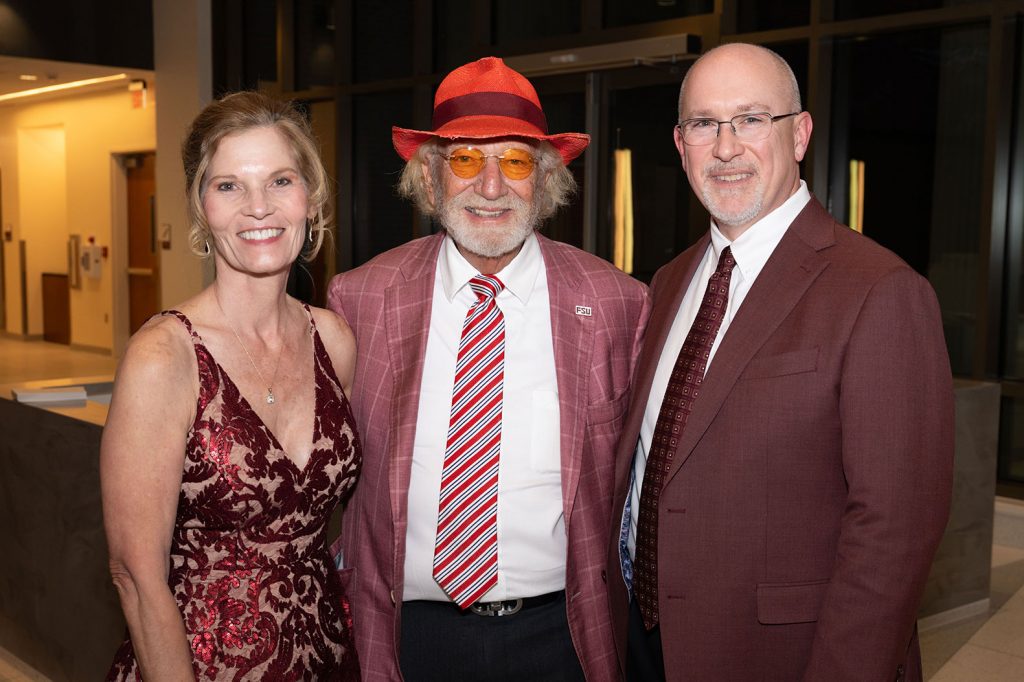
Dr. Herbert Wertheim (middle) with Dean Michael Hartline and Marsha Hartline.

Wertheim’s investment establishes two endowed chairs: the Herbert Wertheim Chair in Health Systems Operations and the Herbert Wertheim Chair in Healthcare Workforce Leadership. These chairs will support faculty members whose scholarship and teaching are dedicated to the continuous improvement of healthcare operations and systems, as well as workforce modernization in healthcare settings. These efforts align with the university’s bold new FSU Health initiative and its emphasis on healthcare in academic programs, research, and investment, including the Wertheim College’s new MBA major in healthcare administration and its annual Business of Healthcare Summit. 

“This initiative will train business students to fill critical gaps in the healthcare business workforce and work with leaders in the healthcare industry and government to tackle pressing healthcare issues now representing more than 17% and $4.5 trillion dollars of the U.S. economy,” Dr. Wertheim said. 

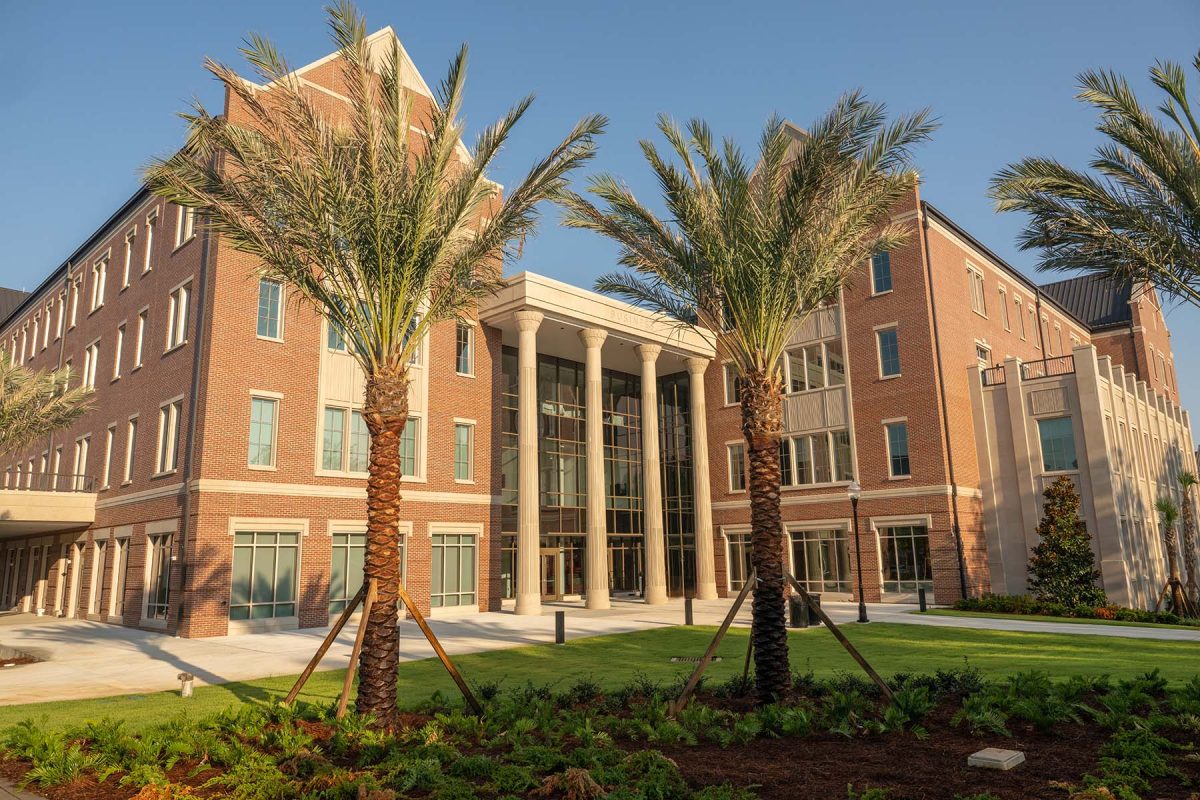
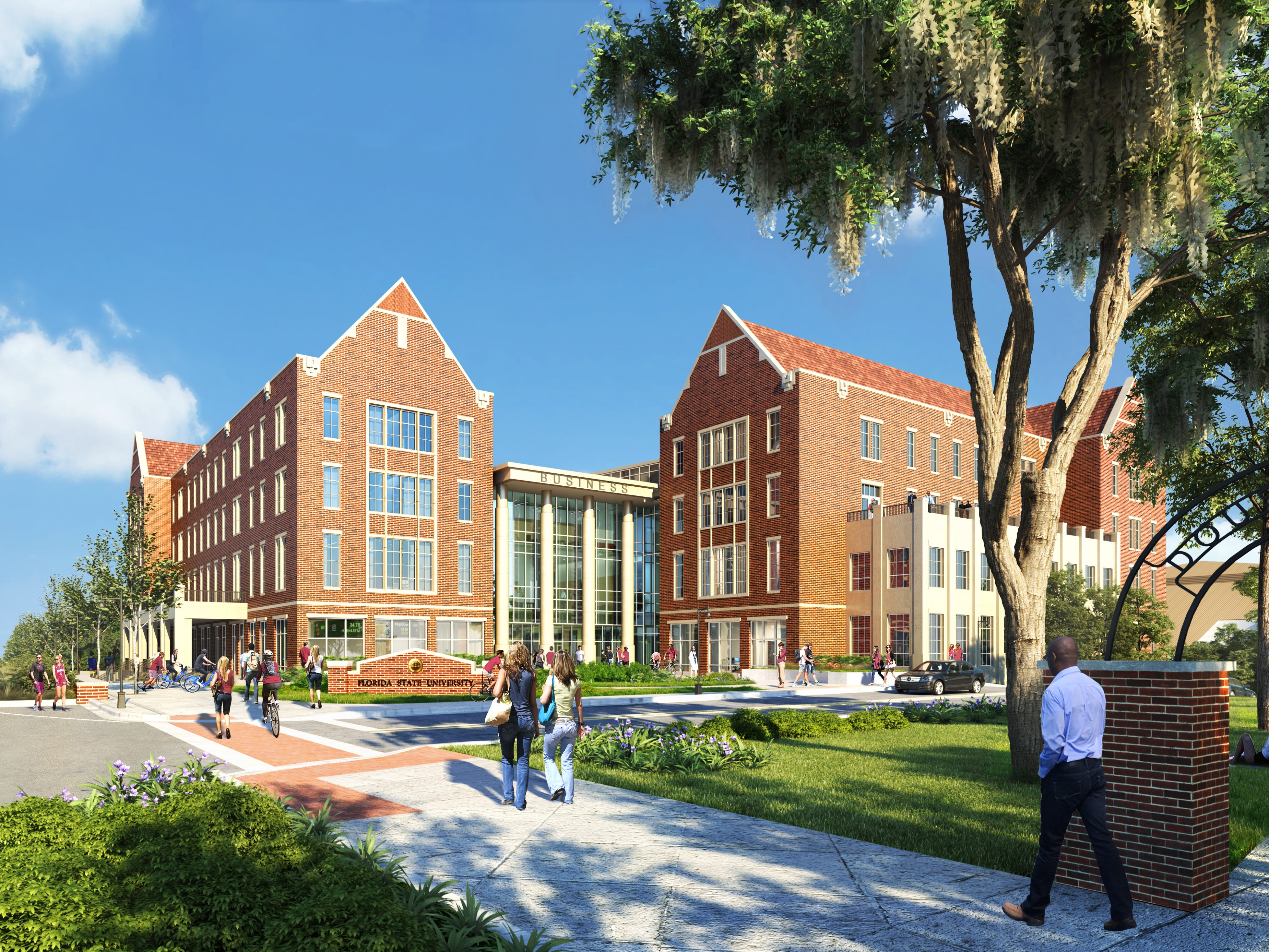
Part of the total philanthropic investment will name the college’s new facility, which stands as the largest academic building in FSU’s history. The Herbert Wertheim Center for Business Excellence will host its first classes in January, with a ribbon-cutting ceremony set for January 6. 

“Generations from now, we will point to this monumental investment as profoundly pivotal in both the trajectory and impact of the college,” said Michael Hartline, dean of the Herbert Wertheim College of Business. “We will continue to generate innovative research and equip graduates to lead in the global marketplace, knowing this infusion of new financial support will allow us to strengthen our best work while also launching important new initiatives.” 

Dr. Wertheim’s $65 million catalytic philanthropic investment is part of $431 million in investments made by the state, private donors, corporations and foundations that will allow the Wertheim College, university and the FSU Health initiative to pursue excellence at the highest level and inspire future philanthropic investments from other donors. 

The Herbert Wertheim College of Business and the Herbert Wertheim Center for Business Excellence will serve as lasting tributes to the stature and business prominence of Dr. Wertheim. 

Wertheim’s transformative contributions have led to the establishment of seven additional named academic institutions in Florida and California: the Herbert Wertheim College of Medicine, the Wertheim College of Nursing & Health Sciences and Wertheim School of Music & Performing Arts at Florida International University; the Herbert Wertheim College of Engineering and the Herbert Wertheim UF Scripps Institute for Biomedical Innovation & Technology at the University of Florida; the Herbert Wertheim School of Public Health and Human Longevity Science at the University of California San Diego; and the Herbert Wertheim School of Optometry and Vision Science at the University of California Berkeley. 

A self-made Horatio Alger recipient and Forbes 400 billionaire, Dr. Wertheim holds the conviction that education serves as a means of dismantling societal obstacles, thereby enhancing the overall well-being of the community and humanity. His gifts and benefactions create formal and informal opportunities for the local and global community that help address some of the most pressing healthcare challenges facing society today. 

Born into a working-class family, Dr. Wertheim overcame early academic challenges and pursued an education in optometry and optical engineering, driven by a passion for science and an innate curiosity. 

In 1971, Dr. Wertheim founded Brain Power Incorporated (BPI), a pioneering company in optical color tints, chemicals and scientific instruments and materials, which has played a critical role in the advancement of eye health for more than 50 years. He is the first doctor to indicate and promote the danger of UV light to the eye and to prescribe his breakthrough invention of UV light absorbers for lenses that has prevented millions from potential diseases and blindness. 


FSU board OKs College of Business naming after $65M gift

Story Summary

  • Florida State University's College of Business is being named after philanthropist Herbert Wertheim following a $65 million gift.
  • The donation is the largest philanthropic endowment gift in the university's history.
  • The new business school building, formerly known as Legacy Hall, will also be named after Wertheim.

As the College of Business and Legacy Hall – a $160 million project – will be named after Wertheim, it comes after the university completed the business school’s new building a few months ago and will open it up to the FSU community for use in the spring. 


Wertheim’s investment to FSU is the largest philanthropic endowment gift in the university's history and the second-largest philanthropic gift FSU has ever received. 


$15 mil for business school operation, another $50 million towards endowment (largest ever, I believe, or close to it. $15 mil to faculty, $10 mil to undergraduate scholarships, $25 mil discretionary fund college of business).

The first-largest philanthropic gift was made when Jan Moran and The Jim Moran Foundation gifted a record $100 million to the university in 2015, where part of the donation was used to create the Jim Moran College of Entrepreneurship in downtown Tallahassee in 2018.  


Sunday, September 28, 2025

FSU College of Nursing receives 'transformative' $10M gift


FSU College of Nursing receives 'transformative' $10M gift

Florida State University’s College of Nursing has secured what is being celebrated as its largest donation ever – a historic $10 million gift, which will help push education efforts in northwest Florida.

The university announced the donation Sept. 22 and it comes from The Fairholme Foundation, which is a Coral Gables-based organization recognized for philanthropic giving as it donates to projects in the arts, sciences, medicine, entrepreneurship and education fields. 

As Northwest Florida enters a new era of health care with the help of the transformative gift, it comes after building plans have been announced for an acute care hospital under the FSU Health name as part of a medical campus in Panama City Beach through a partnership with Tallahassee Memorial HealthCare. TMH has already invested between $30 million and $50 million in the hospital partnership on the regional campus. 

The $10 million for the nursing school will go toward expanding FSU’s undergraduate nursing program to its Panama City campus to address the region’s ongoing nursing shortage. The effort comes as Florida is expected to face a shortage of 60,000 nurses by 2035, according to the Florida Hospital Association

Thursday, September 18, 2025

FSU and Tallahassee Memorial HealthCare join forces to establish academic health center


Florida State University and Tallahassee Memorial HealthCare (TMH) have approved the structure for a historic partnership agreement to create an academic health center in Tallahassee, a development that will transform health care in North Florida and expand FSU’s mission in education and research. 

In a joint statement, FSU President Richard McCullough and TMH CEO Mark O’Bryant said the partnership will “provide the opportunity to establish the hospital as a true quaternary center — expanding services, extending our reach, generating jobs, and fueling regional growth, all while preserving it as a community-focused hospital.”  

“By uniting TMH’s longstanding commitment to community care with FSU’s mission of academic excellence and service, we are seizing an extraordinary opportunity to shape the long-term future of health care in North Florida and beyond,” they said. “This partnership will elevate the quality of health care for our community, create dynamic educational pathways for students, and foster groundbreaking research.”  

The TMH Board of Directors voted unanimously Monday to proceed with the framework for the partnership, marking a pivotal moment for healthcare, research, and education in North Florida. Additional definitive agreements must be finalized in the coming months.  

The idea of transforming TMH into an Academic Health Center has been under discussion for more than a decade. The TMH Board of Directors first outlined the vision in its 2008 strategic plan, and the hospital has since added multiple residency programs in internal medicine, general surgery and psychiatry. 

In 2021, the TMH and FSU Boards jointly approved the FSU/TMH Academic Health Center Strategic Alignment Plan which laid out plans for an Academic Health partnership.  

The partnership further builds on the momentum of the FSU Health Research Center, launched in 2022 with a $125 million appropriation from the Florida Legislature and Governor Ron DeSantis to expand health care access and innovation across North Florida. Construction is under way on this facility on the TMH campus. The 140,000-square-foot building, expected to open in 2026, will house clinical research space, a family residency practice, laboratories, and other facilities designed to connect research and patient care. 

FSU and TMH have now advanced that vision through this Memorandum of Understanding that formally establishes the framework for a fully encompassing academic health center. Under the agreement, FSU and TMH will work with the City of Tallahassee on the transfer of the hospital assets to FSU, including the 75-acre property, 2-million-square-foot hospital building, and related assets. It is anticipated that FSU will then lease the assets to TMH under a new 40-year lease and operating agreement.  

TMH will remain the licensed operator of the hospital, preserving its independent, tax-exempt status, while collaborating with FSU through research, branding, academic and clinical agreements. 

The hospital will transition its brand to FSU Health. The hospital’s board will continue to set strategy, approve the budget and make decisions, though the board composition will now have FSU representation. The hospital will continue to operate under its existing management, and employees will remain TMH employees. There is no shift to state employment, and day-to-day hospital operations will not change. Current partnerships with Florida A&M University and Tallahassee State College will continue and opportunities for future expansion of these partnerships will be encouraged. 


SU Health will be a quaternary care facility (TMH CEO and FSU president). This means that it will be on level with Shand's and Mayo by offering the highest level of care.
More information from https://www.physio-pedia.com/Levels_of_Healthcare :

Quaternary care has been defined as an extension of tertiary care in reference to advanced levels of medicine which are highly specialized and not widely accessed, and usually only offered in a very limited number of national or international centers. Experimental medicine and some types of uncommon diagnostic or surgical procedures are considered quaternary care.


Florida surges to forefront of rare disease research with boost from Sunshine Genetics Act

Florida is poised to become a national beacon for pediatric rare disease research as Gov. Ron DeSantis signs HB 907, the Sunshine Genetics Act. The act jumpstarts the Sunshine Genetics Pilot Program with $3 million, establishes the Florida Institute for Pediatric Rare Diseases within the Florida State University College of Medicine and lays the foundation for a new $100 billion genomic medicine industry in Florida.

In addition to the pilot program funding, the Florida Institute for Pediatric Rare Diseases at Florida State University will also receive an additional $4.5 million to boost research. The funding will empower the institute to pioneer groundbreaking treatments and end the previously lengthy search for a diagnosis by families battling the more than 7,000 rare diseases affecting 30 million Americans.

Demonstrating FSU’s dedication to this initiative, President Richard McCullough committed $2 million from the university’s budget to support the Sunshine Genetics Pilot Program

Sunday, June 15, 2025

FSU Board of Trustees approves $2.97 billion operating budget

 https://www.tallahassee.com/story/news/local/fsu-news/2025/06/16/fsus-board-of-trustees-approve-2-97b-operating-budget-for-2025-26/84182628007/


The operating budget includes $485.6 million for capital projects – compared to $519 million last year – and consists of allocations for the College of Business’ Legacy Hall slated to be complete this summer, the new Football Operations Facility, Doak Campbell Stadium and FSU’s future Academic Health Center, which is expected to open in late 2026.

While the FSU Academic Health Center initiative in Tallahassee has a total fixed capital outlay budget of $137.5 million, a projected $107.6 million is included in the 2025-26 budget for construction, coming out as the university's priciest project for this year.

In partnership with Tallahassee Memorial HealthCare, FSU broke ground on the future 130,000-square-feet center in September on Surgeons Drive just north of Tallahassee State College's Ghazvini Center for Healthcare Education.

Regarding funding allocations for research in the approved budget, the total revenue from federal grants in the university’s restricted fund is $250 million, which is expected to be a $34.6 million decrease compared to last year amid federal funding cuts that have hit home for FSU.

Here are all of the university’s 2025-26 capital projects, with allocations for each:FSU Academic Health Center: $107.6 million
Football Operations Facility: $65.3 million
Doak Campbell Stadium Premium Seating: $50.3 million
Academic Support Facility (Maintenance Complex): $35 million
College of Business' Legacy Hall: $33.5 million
NW Community Housing & Dining: $25 million
Lacrosse Field and Facility: $16.5 million
National High Magnetic Field Laboratory Primary Electrical: $15.4 million
Interdisciplinary Research and Commercialization Building: $15.1 million
All others (144 projects under $10 million): $121.7 million

FSU Board of Trustees approves $2.97 billion operating budget

"The 2025-2026 Annual Operating Budget includes $486 million for capital projects. The capital outlay budget includes allocations for the FSU Academic Health Center in Tallahassee, the new Football Operations Facility, Doak Campbell Stadium, and the College of Business’ Legacy Hall.    

The university’s operating budget injects an estimated $14.7 billion into the local and state economies annually, according to the FSU Center for Economic Forecasting and Analysis. That estimate includes about $4.8 billion in direct revenue or sales and over $197 million in spending by non-resident students, as well as $8.77 billion in lifetime earnings by recent FSU graduates, based on the center’s latest Florida State University System report. "


2024-2025 OPERATING BUDGETS


https://www.flbog.edu/wp-content/uploads/2024/07/PBF-Information-2024-25.pdf 


https://floridaphoenix.com/2025/06/13/done-deal-legislators-reach-a-budget-agreement/


"The chambers agreed to fund $42.4 million to Florida State University for operational funding, the most of any institution."


"The House included in its sprinkle list $4 million for Florida State University, half for the newly created Institute for Pediatric Rare Diseases and half for Sunshine Genetics Pilot Program. "

Sunday, March 9, 2025

ACC Endowments 2024 Update

 ACC Endowments

ACC Mbrs Ranked by Endowments 2024 Update:

1. Stanford - $36.3B
2. Notre Dame - $17.1B (18)
3. Duke - $12.1B (17 - in three seperate endowments)
4. UVA -$9.7B (14.2)
5. Pitt - $5.4B (5.5)
6. UNC - $5.3B (5.8)
7. BC - $3.7B (3.7)
8. GT - $2.9B (3.4 B)
9. Cal - $2.7B 7
10. SMU - $2.02B (2.1)
11. NC St - $2.01B (2.25)
12. Wake - $1.8B (2)
13. Cuse - $1.7B (2.1)
14. VT - $1.6B (1.95)
15. Miami - $1.3B (1.6)
16. Clemson - $994M (1.1)
17. FSU - $898M (1.05)
18. L'Ville - $883M (1)

Link⁷
https://www.collegeraptor.com/college-ra...onference/

Wednesday, August 28, 2024

FSU Future Budget request for the 2025-26 fiscal year

 FSU requested over $130 million in the legislative session, which makes its approved request for next year nearly $80 million more.

As Florida State University still basks in the glow of a successful legislative session, its Board of Trustees recently approved a $219 million state budget request — one with a STEM focus — for the 2025-26 fiscal year.

While the request includes five main initiatives with $96 million in new money, one of them is an ask for $56 million for the modernization of Tallahassee’s National High Magnetic Field Laboratory that is headquartered at FSU.

The board met last week to discuss the budget request for next year, which comes about a month and a half after the university received nearly $83 million in new funds from the state’s $116.5 billion budget for the 2024-25 fiscal year.

FSU trustees also recently approved the university’s largest operating budget in history, which is $3 billion for 2024-2025.

Besides the state budget money being requested for the National MagLab — which is billed as the largest and highest-powered magnet lab in the world — FSU’s wish list for next year’s session shows millions of dollars being requested for a new Translational Aging Research Hub as well as FSU Health and research operations.

The budget also includes recurring funding requests for the joint FAMU-FSU College of Engineering and for growth of FSU’s national prominence, where $65 million is being requested compared to $50 million that was requested for this current fiscal year.

“This will be a lot of work, and we appreciate any chance that any of you as trustees will get to talk to our representatives to support our vision,” FSU President Richard McCullough told the board Monday. “Our time is now.”

When it comes to the MagLab, the facility is Florida’s only national laboratory. It is also home to 17 world-record magnet systems and it hosts nearly 2,000 users every year who conduct ground-breaking research.

Headquartered at FSU since 1994, the MagLab is primarily funded by the state and the National Science Foundation, which gave the laboratory a five-year fund of $195.5 million in 2022.

This year, the state budget included $25 million of Public Education Capital Outlay (PECO) funds that went toward the MagLab.

“I think we've done a really good job over the last two or three years of educating a lot of the senior leadership in the legislature, but there's still a lot of legislators that really don't understand the impact of Florida having a national lab, the prestige it brings and the researchers it brings to Florida and to Florida State,” Collins said. “We're definitely going to have to do some more educating, but I feel really good about this request.”

A little over $5 million dollars of recurring funds is being requested for the 2025-26 fiscal year while $51 million would come from non-recurring funds for modernization tasks — including facility upgrades to maintain world-record magnet systems and the construction of a new Magnet Fabrication building to expand capacity for new magnet creation.

FSU’s $35.5 million request for a Translational Aging Research Hub is in efforts of positioning Florida to be the national leader in healthy aging research, care delivery and digital health solutions.

Investments include creating a center for excellence focused on healthy aging and digital health, creating a statewide informatics and data science infrastructure to support interdisciplinary public health research, and creating training programs and information networks for caregivers and health services providers around healthy aging, according to a report of the legislative budget request.

While $7 million of the request would be recurring funds, $28.5 million would come from non-recurring funds.

Here’s a list of the remaining top items from FSU’s wish list in the legislative budget request for the 2025-26 fiscal year:

  • Bolstering FSU Health and research operations: $50 million ($33.5 million in recurring funds, $16.5 million in non-recurring funds to start up new faculty research labs, develop a shared public health research data hub and make laboratory upgrades).
  • Growing FSU’s national prominence: $65 million (all in recurring funds to hire prominent research faculty, build on nation-leading student success, improve student success for transfers, reducing the student-to-faculty ratio, recruit and retain top talent and invest in new research faculty).
  • Fueling research and student success in the FAMU-FSU College of Engineering: $13.14 million (all in recurring funds to attract and retain top faculty, hire motivated and skilled staff and provide adequate student financial support).