Sunday, June 14, 2015
university projects in limbo as deadline nears
university projects in limbo as deadline nears
"The House and Senate have agreed to base preeminent funding levels for FSU ($20 million) and the University of Florida ($25 million). But the chambers are $1 million apart on additional preeminent funding: The Senate proposed $4 million and the House $5 million in additional preeminent funding. As of Friday, the issue had been bumped to Corcoran and Lee to decide on.
Also undecided is how much FSU will get in performance funding. Eight of the state’s universities will vie for the $400 million in available performance funds. FSU dropped in the rankings this year but still retained a high-enough score to maintain the funds. Last year, FSU received $31.7 million in performance money."
"FSU’s legislative priorities:
- $5 million in additional preeminence funding to attract top-tier faculty
- Current negotiations: House: $5 million - Senate: $4 million
Capital projects (to be determined):
- Construction of the Earth, Ocean and Atmospheric Science Building - $36.1 million
- STEM Teaching Lab planning phase - $2.2 million
- Planning phase of Interdisciplinary Research and Commercialization Building - $5 million"

Friday, June 12, 2015
Arena District Development UPDATE
Massive changes to the plan.....not sure what to think. Ambitious. Just hope it looks good. FSU has done well in that area so far.
http://arenadistrict.fsu.edu/
http://arenadistrict.fsu.edu/documents/2015-06-08-Version2.pdf
https://www.youtube.com/watch?v=eU0TTyhz1_o
http://arenadistrict.fsu.edu/
http://arenadistrict.fsu.edu/documents/2015-06-08-Version2.pdf
https://www.youtube.com/watch?v=eU0TTyhz1_o
ACC Title game TV ratings
Andrea Adelson
How good was that? It was up 417 percent in TV ratings over their meeting in the 2012 ACC title game. Obviously '14 had way more at stake.
The 2014 ACC title game btw FSU-GT was the highest rated + most watched in league history, w/a 6.2 final rating and 10.1 million viewers.
ACC brings in over $300 million for 2013-14
David Teel
Unlike the SEC and others, #ACC has not projected 2014-15 revenue, but with MD settlement and CFP windfall, expect significant spike.
Maryland shown as receiving $18.0M in 2013-14 #ACC revenue, but that w/held in court settlement. Will eventually go to remaining schools.
More #ACC distributions: Miami $19.5M, BC $19.4M, GT $19.2M, Cuse $19.2M, Pitt $18.9M, NC State $18.2, WF $17.9M, ND $4.9M.
A year ago, #ACC estimated 2013-14 revenue at $291.7M, so came in more than $11M above projection.
Just received #ACC 2013-14 tax return. Total revenue up 30% to $302,306,749. Biggest jumps: TV to $197.2M and bowls to $48.8M.
Shows how much more football is worth. ND is only getting basketball/non-FB share and it's over $14 million less. https://twitter.com/DavidTeelatDP/status/609392931930251264 …
More #ACC distributions: Miami $19.5M, BC $19.4M, GT $19.2M, Cuse $19.2M, Pitt $18.9M, WF $17.9M, ND $4.9M.
ACC brings in over $300 million for 2013-14
"The ACC hit a record in revenue for the 2013-14 year, bringing in over $300 million to beat its own projections.
"The ACC hit a record in revenue for the 2013-14 year, bringing in over $300 million to beat its own projections.
According to IRS filings, the ACC had a record $302.3 million in revenue for last season, its first year as a 15-member league. But it also paid its member institutions $11 million in league championship game/tournament reimbursements, raising its total revenue number to $313.3 million.
The 14 full-time ACC members each received an average of about $22.1 million. Notre Dame, a full member in all sports but football, received $4.9 million, according to the IRS filing. Last year, the ACC projected it would bring in about $291 million."
http://csnbbs.com/thread-738898-page-23.html
"Rights and Licensing revenue for 2014 broke down this way (from USA Today):
Clemson: $29,962,584
S Carolina: $31,593,526
Florida State: $40,493,922
Florida: $39,424,395
So, yes, the last year that ACC data is currently available it was neck-and-neck with the SEC.
Even the SEC numbers being quoted are not "official" yet.
BTW, I think Teel's numbers are a subset of the above revenues. "
"Lou_C Wrote: Ok...so David Teel just got the ACC tax returns for 2013-14. Here's what everyone got...
VT $19.3M
UVa $18.3M
Clemson $21.3
Duke & FSU $20.2M
UNC $19.8M
Miami $19.5M
BC $19.4M
GT $19.2M
Cuse $19.2M
Pitt $18.9M
N.C. State $18.2M
WF $17.9M
ND $4.9M
This does NOT include championship reimbursements, for whatever that's worth.
This is NOT for comparison to the SEC numbers in this thread of $31M. That is what the SEC will distribute for 2014-2015...this is for 2013-2014. The SEC distributed $20.9M per school for 2013-2014. So before the SEC Network, the ACC had pulled reasonably close.
The ACC (and I think PAC) does NOT announce projected payments. We don't find out until someone get's their hands on their tax returns.
So this does not include the playoff money, any tv increases, or new bowl payments coming in 2014-2015. So the question is how much is that worth, and how far it will be behind $31M."
ACC tax return shows doubling of revenue last four years but future challenges
"The ACC reported $302,306,749 in revenue, nearly $11 million more than the $291.7 million it had estimated last spring. Moreover, the windfall was 30 percent higher than 2012-13’s $232.4 million and nearly double 2009-10’s $158.2 million.
Member schools, league HQ and fans have every reason to welcome the news, but no one should confuse the ACC with the Big Ten and Southeastern Conference, the Bill Gates and Warren Buffett of college sports.
And everyone should continue to recognize the ACC’s need to team with ESPN on a profitable cable channel that would partially close the revenue gap with the Big Ten and SEC, each of which boasts a cash-printing cable network.
Some observations regarding the ACC's tax return and long-term finances:
# Like each of the five power conferences, the ACC’s revenue bump was fueled by television rights fees, which jumped from $146.6 million in 2012-13 to $197.2 million in 2013-14, the league’s first with 14 members for football and 15 – Notre Dame is the partial – for other sports. Thanks to its ESPN contracts, ACC media rights have increased 149 percent in the last three years.
# In keeping with past ratios, the ACC distributed 91 percent of its revenue to member schools – the league does not disclose the exact formula, but it includes football bowl participation and other performance metrics. Shares ranged from Clemson’s $21.3 million to Wake Forest’s $17.9 million. Virginia Tech’s was $19.3 million, Virginia’s $18.3 million.
Notre Dame’s partial share was $4.9 million, and while the tax return, Form 990 for the CPAs in the audience, showed Maryland receiving $18.0 million in its final year of ACC membership, that money was withheld as part of a court settlement over the Terps’ move to the Big Ten. Maryland’s negotiated exit fee of approximately $31 million will be shared among the ACC’s remaining members and likely will be reflected in 2014-15 distributions.
None of the above shares include an approximately $11 million championship pool that the ACC reserves for programs that qualify for NCAA postseason."
"Lack of projection notwithstanding, ACC revenue should increase markedly again. First, there’s the Maryland settlement money. Second, there’s a windfall from the inaugural College Football Playoff – the ACC’s share was about $58.3 million, a 70-percent jump from the $34.2 million provided by the Bowl Championship Series in 2013-14. Finally, there's the new Orange Bowl contract, which began last season and is valued at $27.5 million.
# Analyzing conference distributions is an annual rite among media and fans, even as varying accounting practices and cycles of television contracts preclude precise comparisons.
CBSSports.com’s Jon Solomon and the San Jose Mercury-News’ Jon Wilner excel at gathering and assessing data from the power conferences, and according to their reporting on the other four, the ACC’s average $19.2 million distribution to full members in 2013-14 lagged far behind the Big Ten ($26.4 million) and slightly below the Pacific 12 ($21 million), SEC ($20.9 million) and Big 12 ($19.8 million).
The contrasts could be more jarring in 2014-15, and beyond.
The SEC and Big 12 last month projected per-school distributions of $31.2 million and $25.6 million, respectively. The SEC’s 49-percent jump is due in large measure to the rousing launch of the SEC Network, a partnership with ESPN that the ACC can only hope to approach -- South Carolina athletic director Ray Tanner told his school’s Board of Trustees that each of the league’s 14 members netted about $5 million from the network.
According to an internal Purdue document obtained by the Lafayette (Ind.) Journal & Courier, the Big Ten expects per-school shares to mushroom to $44.5 million by 2017-18, the first year of the conference’s renegotiated Tier One television deals.
The ACC’s contract with ESPN extends through 2026-27.
Which brings us to the relentlessly parsed prospects for an ACC channel. The league office has told athletic directors and coaches to refrain from such discussions, and Swofford understandably offers only enough nuggets to encourage, but not inflate, expectations.
As knowledgeable sports business reporter Chadd Scott wrote earlier this month on SportsDayNow.com, a channel is not a cure-all for the ACC. Indeed, as evident in USA Today’s 2013-14 database of public school athletic revenue and expenses, shortfalls in ticket sales and fundraising are primary reasons No. 17 Florida State was the only ACC member among the top 25 nationally in revenue.
The 14 full-time ACC members each received an average of about $22.1 million. Notre Dame, a full member in all sports but football, received $4.9 million, according to the IRS filing. Last year, the ACC projected it would bring in about $291 million."
http://csnbbs.com/thread-738898-page-23.html
"Rights and Licensing revenue for 2014 broke down this way (from USA Today):
Clemson: $29,962,584
S Carolina: $31,593,526
Florida State: $40,493,922
Florida: $39,424,395
So, yes, the last year that ACC data is currently available it was neck-and-neck with the SEC.
Even the SEC numbers being quoted are not "official" yet.
BTW, I think Teel's numbers are a subset of the above revenues. "
"Lou_C Wrote: Ok...so David Teel just got the ACC tax returns for 2013-14. Here's what everyone got...
VT $19.3M
UVa $18.3M
Clemson $21.3
Duke & FSU $20.2M
UNC $19.8M
Miami $19.5M
BC $19.4M
GT $19.2M
Cuse $19.2M
Pitt $18.9M
N.C. State $18.2M
WF $17.9M
ND $4.9M
This does NOT include championship reimbursements, for whatever that's worth.
This is NOT for comparison to the SEC numbers in this thread of $31M. That is what the SEC will distribute for 2014-2015...this is for 2013-2014. The SEC distributed $20.9M per school for 2013-2014. So before the SEC Network, the ACC had pulled reasonably close.
The ACC (and I think PAC) does NOT announce projected payments. We don't find out until someone get's their hands on their tax returns.
So this does not include the playoff money, any tv increases, or new bowl payments coming in 2014-2015. So the question is how much is that worth, and how far it will be behind $31M."
ACC tax return shows doubling of revenue last four years but future challenges
"The ACC reported $302,306,749 in revenue, nearly $11 million more than the $291.7 million it had estimated last spring. Moreover, the windfall was 30 percent higher than 2012-13’s $232.4 million and nearly double 2009-10’s $158.2 million.
Member schools, league HQ and fans have every reason to welcome the news, but no one should confuse the ACC with the Big Ten and Southeastern Conference, the Bill Gates and Warren Buffett of college sports.
And everyone should continue to recognize the ACC’s need to team with ESPN on a profitable cable channel that would partially close the revenue gap with the Big Ten and SEC, each of which boasts a cash-printing cable network.
# Like each of the five power conferences, the ACC’s revenue bump was fueled by television rights fees, which jumped from $146.6 million in 2012-13 to $197.2 million in 2013-14, the league’s first with 14 members for football and 15 – Notre Dame is the partial – for other sports. Thanks to its ESPN contracts, ACC media rights have increased 149 percent in the last three years.
# In keeping with past ratios, the ACC distributed 91 percent of its revenue to member schools – the league does not disclose the exact formula, but it includes football bowl participation and other performance metrics. Shares ranged from Clemson’s $21.3 million to Wake Forest’s $17.9 million. Virginia Tech’s was $19.3 million, Virginia’s $18.3 million.
Notre Dame’s partial share was $4.9 million, and while the tax return, Form 990 for the CPAs in the audience, showed Maryland receiving $18.0 million in its final year of ACC membership, that money was withheld as part of a court settlement over the Terps’ move to the Big Ten. Maryland’s negotiated exit fee of approximately $31 million will be shared among the ACC’s remaining members and likely will be reflected in 2014-15 distributions.
None of the above shares include an approximately $11 million championship pool that the ACC reserves for programs that qualify for NCAA postseason."
"Lack of projection notwithstanding, ACC revenue should increase markedly again. First, there’s the Maryland settlement money. Second, there’s a windfall from the inaugural College Football Playoff – the ACC’s share was about $58.3 million, a 70-percent jump from the $34.2 million provided by the Bowl Championship Series in 2013-14. Finally, there's the new Orange Bowl contract, which began last season and is valued at $27.5 million.
# Analyzing conference distributions is an annual rite among media and fans, even as varying accounting practices and cycles of television contracts preclude precise comparisons.
CBSSports.com’s Jon Solomon and the San Jose Mercury-News’ Jon Wilner excel at gathering and assessing data from the power conferences, and according to their reporting on the other four, the ACC’s average $19.2 million distribution to full members in 2013-14 lagged far behind the Big Ten ($26.4 million) and slightly below the Pacific 12 ($21 million), SEC ($20.9 million) and Big 12 ($19.8 million).
The contrasts could be more jarring in 2014-15, and beyond.
The SEC and Big 12 last month projected per-school distributions of $31.2 million and $25.6 million, respectively. The SEC’s 49-percent jump is due in large measure to the rousing launch of the SEC Network, a partnership with ESPN that the ACC can only hope to approach -- South Carolina athletic director Ray Tanner told his school’s Board of Trustees that each of the league’s 14 members netted about $5 million from the network.
According to an internal Purdue document obtained by the Lafayette (Ind.) Journal & Courier, the Big Ten expects per-school shares to mushroom to $44.5 million by 2017-18, the first year of the conference’s renegotiated Tier One television deals.
The ACC’s contract with ESPN extends through 2026-27.
Which brings us to the relentlessly parsed prospects for an ACC channel. The league office has told athletic directors and coaches to refrain from such discussions, and Swofford understandably offers only enough nuggets to encourage, but not inflate, expectations.
As knowledgeable sports business reporter Chadd Scott wrote earlier this month on SportsDayNow.com, a channel is not a cure-all for the ACC. Indeed, as evident in USA Today’s 2013-14 database of public school athletic revenue and expenses, shortfalls in ticket sales and fundraising are primary reasons No. 17 Florida State was the only ACC member among the top 25 nationally in revenue.
Of the record 20 public schools that reported more than $100 million in income, the SEC and Big Ten accounted for seven each, the Big 12 three, Pac-12 two and ACC one.
Perhaps Scott’s most salient point is that with small, private schools such as Duke and Wake Forest, the ACC’s average undergraduate enrollment, including Notre Dame, is approximately 15,700. So despite a geographic footprint that includes half the U.S. population, the ACC has a smaller fan base than the SEC (average enrollment of about 24,500) and Big Ten (27,800), making a potential network a harder sell.
Granted, if money guaranteed success, top-10 revenue producers Texas, Michigan and Florida wouldn’t have given the bum’s rush to football coaches Mack Brown, Brady Hoke and Will Muschamp. And half the top 20 wouldn't have failed to reach the 2015 NCAA men's basketball tournament.
But ACC schools, collectively and individually, need to find more money. The task won’t be easy, and even if they do, the Big Ten and SEC still figure to lead the arms race.
The ACC's challenge: Do more with less.
Some charts offered for context. The first shows recent ACC revenue for rights fees, football bowls, NCAA basketball tournament and the average, per-school share.
ACC REVENUES LAST SEVEN YEARS
Total TV Bowl NCAA Avg. share
2007-2008 $162.8 $75.3 $29.2 $15.1 $11.8
2008-2009 $172.7 $76.9 $30.7 $15.9 $13.6
2009-2010 $158.2 $77.6 $31.6 $18.2 $11.7
2010-2011 $167.2 $79.3 $36.7 $18.2 $12.3
2011-2012 $223.6 $130.5 $43.8 $17.7 $16.9
2012-2013 $232.4 $146.6 $36.7 $18.2 $17.6
2013-2014 $302.3 $197.2 $48.8 $17.5 $19.2*
* Average full share. Partial ACC member Notre Dame received $4.9 million in its first year in the league.
VIRGINIA TECH, VIRGINIA SHARES OF ACC REVENUE
Tech UVa
2007-2008 $12.8 $12.1
2008-2009 $15.4 $12.5
2009-2010 $11.9 $11.0
2010-2011 $14.1 $11.2
2011-2012 $18.5 $17.4
2012-2013 $18.3 $16.8
2013-2014 $19.3 $18.3
SCHOOL SHARES FOR 2013-14
Clemson: $21.3M
Florida State: $20.2M
Duke: $20.2M
North Carolina: $19.8M
Miami: $19.5M
Boston College: $19.4M
Virginia Tech: $19.3M
Georgia Tech: $19.2M
Syracuse: $19.2M
Pittsburgh: $18.9M
Virginia: $18.3M
N.C. State: $18.2M
Wake Forest: $17.9M
Notre Dame: $4.9M"
Perhaps Scott’s most salient point is that with small, private schools such as Duke and Wake Forest, the ACC’s average undergraduate enrollment, including Notre Dame, is approximately 15,700. So despite a geographic footprint that includes half the U.S. population, the ACC has a smaller fan base than the SEC (average enrollment of about 24,500) and Big Ten (27,800), making a potential network a harder sell.
But ACC schools, collectively and individually, need to find more money. The task won’t be easy, and even if they do, the Big Ten and SEC still figure to lead the arms race.
The ACC's challenge: Do more with less.
Some charts offered for context. The first shows recent ACC revenue for rights fees, football bowls, NCAA basketball tournament and the average, per-school share.
ACC REVENUES LAST SEVEN YEARS
2007-2008 $162.8 $75.3 $29.2 $15.1 $11.8
2008-2009 $172.7 $76.9 $30.7 $15.9 $13.6
2009-2010 $158.2 $77.6 $31.6 $18.2 $11.7
2010-2011 $167.2 $79.3 $36.7 $18.2 $12.3
2011-2012 $223.6 $130.5 $43.8 $17.7 $16.9
2012-2013 $232.4 $146.6 $36.7 $18.2 $17.6
2013-2014 $302.3 $197.2 $48.8 $17.5 $19.2*
* Average full share. Partial ACC member Notre Dame received $4.9 million in its first year in the league.
VIRGINIA TECH, VIRGINIA SHARES OF ACC REVENUE
Tech UVa
2007-2008 $12.8 $12.1
2008-2009 $15.4 $12.5
2009-2010 $11.9 $11.0
2010-2011 $14.1 $11.2
2011-2012 $18.5 $17.4
2012-2013 $18.3 $16.8
2013-2014 $19.3 $18.3
SCHOOL SHARES FOR 2013-14
Clemson: $21.3M
Florida State: $20.2M
Duke: $20.2M
North Carolina: $19.8M
Miami: $19.5M
Boston College: $19.4M
Virginia Tech: $19.3M
Georgia Tech: $19.2M
Syracuse: $19.2M
Pittsburgh: $18.9M
Virginia: $18.3M
N.C. State: $18.2M
Wake Forest: $17.9M
Notre Dame: $4.9M"
Wednesday, June 10, 2015
FSU Factoid of the Day
SportsCenter
After catching last night's no-hitter, Buster Posey adds to an already impressive resume. pic.twitter.com/5sIKrusYcu

Tuesday, June 9, 2015
FSU Foundation Fundraising
Dear Friend of Florida State:
Florida State University ranks 214 out of 268 national universities in financial resources, according to U.S. News and World Report. As low as this ranking is, it belies the fact that our students and alumni excel spectacularly, since the University makes the most of its finite resources. Consider: For two consecutive years (2013-14) Florida State was ranked first in the nation by U.S. News when it comes to delivering quality to its students. This year, we are ranked second.
Today, I ask that you consider making a gift to Florida State and join more than 17,000 alumni who choose to support the University each year. Even though we continue to make the most of what we have, we cannot afford to lose ground due to a lack of resources. What will your support provide? Here are a few examples:
- On average, 3,589 scholarships are awarded each year through the FSU Foundation to help students achieve their dreams of earning a college degree;
- The latest books, journals and online resources for a variety of disciplines are made available to every student, faculty and staff member at our University Libraries; and
- Nearly $4 million is given in direct faculty support, improving the student experience through classroom instruction and research programs.
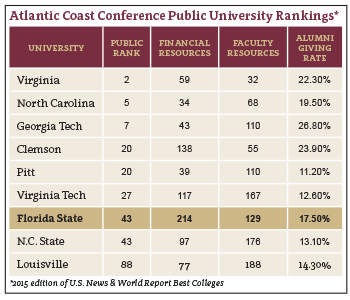
Private philanthropy can help Florida State close the gap on key indicators. We have the best alumni giving rate when compared to all Florida public universities—a statistic for which we can all be proud—but we fall short when compared to public universities in the ACC. Help us Raise the Torch for Florida State by making a gift today.
|
Faculty resources are an important factor in national rankings—and it is an area in which we must improve. The University has already devoted its resources to the hiring of additional faculty—people who are national and international leaders in their disciplines. However, your support is needed to fill in the gaps. Private dollars allow Florida State to compete with other major universities in the recruitment and retention of faculty members.
Among the nine public universities in the Atlantic Coast Conference, FSU ranks sixth in faculty resources and a distant ninth for total financial resources. We need your help to improve upon these numbers. Please, make a gift today. You can designate your gift to benefit the programs and initiatives that are meaningful to you through any of the following ways:
- Online: Visit our secure giving site to put your gift to work quickly.
- Phone: Call (850) 644-6000 to make a gift using your credit or debit card.
- Mail: Send your check, made payable to the FSU Foundation, by mail to:
Florida State University Foundation
2010 Levy Ave., P.O. Box 3062739
Tallahassee, FL 32306-2739
Each gift received will get us closer to the $1 billion goal of Raise the Torch: The Campaign for Florida State. Your support will not only help today’s students but also alumni by increasing the value of a degree from Florida State. On behalf of everyone at FSU who will benefit from your support, thank you!
With Seminole Pride,

Tom Jennings
Vice President for University Advancement
and President, FSU Foundation
Vice President for University Advancement
and President, FSU Foundation
P.S. Double or triple the impact of your gift!
You could potentially double or even triple the impact of your gift to Florida State if you or your spouse is employed by a company that matches the charitable contributions of its employees. Visit matchinggifts.com/fsu to find out if your employer has a matching gift policy.
You could potentially double or even triple the impact of your gift to Florida State if you or your spouse is employed by a company that matches the charitable contributions of its employees. Visit matchinggifts.com/fsu to find out if your employer has a matching gift policy.
Frenchtown Committee Reviews Plans for Medical Center, Retail Stores
Improvements to area around FSU campus.
Frenchtown Committee Reviews Plans for Medical Center, Retail Stores
"TALLAHASSEE, Fla. -- Preliminary plans are coming into focus on Tallahassee's Southside and the Frenchtown area.
The Greater Frenchtown/Southside Community Redevelopment Area Citizens Advisory Committee has plans for a Big Bend Cares Medical Center.
It also reviewed plans for a redeveloped Frenchtown, which involves a grocery store, urgent care clinic, retail stores and housing.
"That's what's at the heart of the project is really to have a crosscut of the socioeconomic fabric of our community living in that area," said Donald Gray of the Fitzgerald Collaborative Group.
The committee also discussed next year's budget, which is estimated at a little more than $2 Million."

Frenchtown Project: Excitement & Unanswered Questions
"
Tallahassee -- Developers are presenting more details of an ambitious plan for a stretch of West Tennessee Street.
Property owners propose a revitalization project including new townhomes and businesses, even an urgent care clinic.
But city officials say there are still many unanswered questions.
The project would cover a large area in the 400 block of West Tennessee Street, surrounding the former homeless shelter.
A group called Frenchtown Redevelopment Partners envisions apartments, townhomes, a public courtyard, and retail areas including a grocery store.
"It would benefit the greater community, cause these are uses that are vital for downtown, for residents downtown. A grocery store within walking district, right? Residents downtown, students, residents of Frenchtown," said Donald Gray with Fitzgerald Collaborative, the urban designer who came up with the conceptual plans for the development.
Right now, the block includes just a few businesses among empty lots and vacant buildings.
Gray envisions retail space for existing and new stores, a banking center, a business incubator, along with apartments, condos, a parking garage, pedestrian areas, even an amphitheater. He says the project could really boost the attitude of people living in the neighborhood.
"Not only feeling like I belong in the community but feeling like I have a stake in the community," said Gray.
Just across the street from the area, Mary Jane Banes-Egina is encouraged by the plans. She and seven partners just opened the city's only Filipino restaurant, REAL Sarap. Banes-Egina calls the current scene on West Tennessee old and dire.
"This area needs a facelift, something modern, something that people will say, 'Okay let's go visit this new place!' Because curiosity always brings people," said Banes-Egina.
Tallahassee's Community Redevelopment Agency says at this point, plans for the site are very preliminary. There's no estimated cost or timeline.
CRA Executive Director Roxanne Manning says the developer needs to conduct a market study to determine feasibility and provide more information about tenants and funding.
Mary Jane calls it a long shot, but hopes to see big changes across the street.
"This is a positive thing, something you're changing the facade changing the impression of the area," she said."
Frenchtown Committee Reviews Plans for Medical Center, Retail Stores
"TALLAHASSEE, Fla. -- Preliminary plans are coming into focus on Tallahassee's Southside and the Frenchtown area.
The Greater Frenchtown/Southside Community Redevelopment Area Citizens Advisory Committee has plans for a Big Bend Cares Medical Center.
It also reviewed plans for a redeveloped Frenchtown, which involves a grocery store, urgent care clinic, retail stores and housing.
"That's what's at the heart of the project is really to have a crosscut of the socioeconomic fabric of our community living in that area," said Donald Gray of the Fitzgerald Collaborative Group.
The committee also discussed next year's budget, which is estimated at a little more than $2 Million."
Frenchtown Project: Excitement & Unanswered Questions
"
Tallahassee -- Developers are presenting more details of an ambitious plan for a stretch of West Tennessee Street.
Property owners propose a revitalization project including new townhomes and businesses, even an urgent care clinic.
But city officials say there are still many unanswered questions.
The project would cover a large area in the 400 block of West Tennessee Street, surrounding the former homeless shelter.
A group called Frenchtown Redevelopment Partners envisions apartments, townhomes, a public courtyard, and retail areas including a grocery store.
"It would benefit the greater community, cause these are uses that are vital for downtown, for residents downtown. A grocery store within walking district, right? Residents downtown, students, residents of Frenchtown," said Donald Gray with Fitzgerald Collaborative, the urban designer who came up with the conceptual plans for the development.
Right now, the block includes just a few businesses among empty lots and vacant buildings.
Gray envisions retail space for existing and new stores, a banking center, a business incubator, along with apartments, condos, a parking garage, pedestrian areas, even an amphitheater. He says the project could really boost the attitude of people living in the neighborhood.
"Not only feeling like I belong in the community but feeling like I have a stake in the community," said Gray.
Just across the street from the area, Mary Jane Banes-Egina is encouraged by the plans. She and seven partners just opened the city's only Filipino restaurant, REAL Sarap. Banes-Egina calls the current scene on West Tennessee old and dire.
"This area needs a facelift, something modern, something that people will say, 'Okay let's go visit this new place!' Because curiosity always brings people," said Banes-Egina.
Tallahassee's Community Redevelopment Agency says at this point, plans for the site are very preliminary. There's no estimated cost or timeline.
CRA Executive Director Roxanne Manning says the developer needs to conduct a market study to determine feasibility and provide more information about tenants and funding.
Mary Jane calls it a long shot, but hopes to see big changes across the street.
"This is a positive thing, something you're changing the facade changing the impression of the area," she said."
Subscribe to:
Posts (Atom)