Saturday, May 22, 2021

FSU asking Blueprint to 'invest' $20 million in tax money for football stadium project


John Thrasher: Blueprint's economic development funds can, should help improve FSU's Doak

With perhaps the exception of the Florida Capitol, Doak Campbell Stadium is one of the best known landmarks in Tallahassee.

This awe-inspiring and immense brick structure currently seats nearly 80,000 fans, while the University Center that surrounds it is home to several academic departments including the FSU College of Motion Picture Arts, the FSU College of Communication and Information, and the Dedman College of Hospitality. It houses offices, classrooms, meeting space and the FSU Visitor Center.

Keeping this structure up to date, safe and inviting to visitors from around the world is vitally important for Florida State University and Tallahassee.

When it was built more than 70 years ago, Doak Campbell Stadium was derided by our rivals as an “erector set.” Over the years, investments by the Seminole Boosters and private donors, as well as the state and local government, have turned the stadium into one of the largest continuous brick structures in the United States.

This amazing facility – an incredible economic engine that brings $100 million to the local economy – simply would not exist without the continuous support of our local community.

But the truth is, many of the features of the original structure remain today, hidden from view by the amazing brickwork that surrounds it. That infrastructure is now badly in need of attention.

Because of the facility’s impact on the local economy, FSU has approached local government leaders about contributing to the renovations of this Tallahassee landmark.

Our request is for structural and safety enhancements only, including improvements to Doak’s foundation, electricity, lighting, drainage and concourses as well as upgraded railings and fixing protruding beams.

While most of the funding for improvements to Doak will come from non-local government sources, it is essential that we complete the new vision with help from Blueprint. This request is not about shifting dollars from another project. When more than 60% of Leon County voters approved Blueprint, a percentage of those funds were set aside for general economic development efforts, while other dollars were earmarked for specific capital projects. The money we are requesting comes only — and appropriately — from economic development funds.

Therefore, we are asking for assistance with the badly needed renovations to Doak to ensure the structure is sound, safe, stable and will last for many years to come.

An investment in Doak Campbell Stadium — home to the Florida State Seminoles football team — is compelling.

Typically, an investor wants to get his or her money back in five years or less. In this case, there is $51 million in direct spending by visitors during a seven-game home football schedule and a total economic impact of $100 million. That means the $20 million of requested Blueprint economic development funding would result in a return on investment in less than a year.

Renovating Doak helps keep the FSU football program healthy by making sure its house is in top shape. And it helps keep the local economy healthy by investing dollars where they will have the most impact.

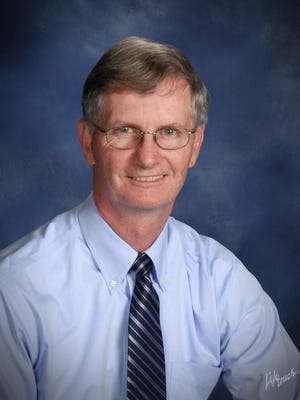
FSU President John Thrasher

John Thrasher is President of Florida State University in Tallahassee.


Florida State University is asking the Blueprint Intergovernmental Agency to invest $20 million into structural and safety upgrades as part of an overall project to renovate 71-year-old Doak Campbell Stadium.

The university, in documents submitted Monday to Blueprint, said with the investment of tax money to maintain the underlying structure, it could focus on incrementally pumping another $100 million into other renovations to improve fan experiences such as diversifying seating options.

A feasibility study submitted by FSU identified some of the issues taxpayer money could fund, including replacing lighting, railing improvements, painting and rust prevention to the interior structures and guardrails, additional steps within the seating bowl, addressing field drainage and creating a central food commissary.

In all, a home football game attracted 220,000 out-of-town visitors to Tallahassee, resulting in millions of dollars being pumped into the community, wrote FSU Vice President and Director of Athletics David Coburn in a letter to Department of PLACE (Planning, Land Management & Community Enhancement) Director Ben Pingree.

“FSU has a total annual economic impact of $10 billion,” he wrote. “$1 billion is directly related to people who visit our community for reasons related to FSU. Continuing to invest in the stadium is a key driver to the vibrancy of Tallahassee and Leon County.”

Doak Campbell not the first request for stadium funding

A precedent for using collected taxes to support athletics facilities in town emerged last year when Blueprint, made up of all 12 city and county commissioners, committed $10 million to renovations at Florida A&M University’s Bragg Stadium to ensure its football team could play in the ailing stadium this season. In addition to bolstering and maintaining revenues connected to the Rattlers’ home games, the project is expected to support construction related jobs.

The feasibility study provided to Blueprint, which meets May 27, details the tourism power associated with a home game. The funding, both from Blueprint and collected through fundraising, would be used to enhance food and beverage experiences, improve restrooms, provide more shade and more climate-controlled areas, build more comfortable seating, improve WiFi and cellular coverage and offer pre- and post-game activities to increase the value of the overall experience.

The remaining $100 million, which the FSU Board of Trustee authorized the FSU Boosters to begin fundraising in March, will go toward renovations to the South end zone, west side renovations and to create “cool zones” with concourses.  

It’s not yet clear where the funding will come from for FSU’s request. Blueprint’s agenda is released on Saturday.  

Bragg renovations were funded by pulling $10 million from a proposal to build a convention center in FSU’s long-term goal of an Arena District stretching from campus up Madison Street to the Donald L. Tucker Civic Center and a hotel the university is pursuing.

The convention center is being funded out of economic development dollars because of the potential impact it could have in attracting events and associated commerce to Tallahassee, the only state capital in the south without a convention center.

Months after the decision to pay for Bragg renovations, Blueprint again signaled it would be willing to pump money into athletics facilities at Tallahassee Community College as it entertained for the first time a presentation and $1 million request by TCC President Jim Murdaugh.


Convention center plans long in the making

The idea for a convention center was brewing even before 2012 when FSU acquired the Tucker Center from Leon County. After years of community discussion, the university told the IA it could take on a $20 million project for a smaller center but would like to see something more substantial.

In March 2020, Blueprint officials increased the allocation to $40 million, spurring  backlash from some members of the public and some commissioners, who would like to see investment in other parts of the city instead


Friday, May 21, 2021

ACC's latest tax filing underscores challenges for new commissioner Jim Phillips


ACC's latest tax filing underscores challenges for new commissioner Jim Phillips

The ACC’s per-school share continues to rank last among the Power Five and lag far behind the Big Ten and Southeastern Conference. As USA Today’s Steve Berkowitz reported Thursday, the Big Ten distributed, on average, $54.3 million to its 12 longest-standing members, the SEC $45.5 million to its 14 schools. Big 12 shares ranged from $37 million to $40.5 million, and the Pacific 12’s average was $33.8 million.

Virginia Tech president Tim Sands echoed Phillips last month when he said the conference’s finances were a focus of the presidents and chancellors’ interviews with commissioner candidates.

“It’s not just the money,” Sands said, “but you can’t [compete] without that kind of support. … That’s a major expectation of the presidents and chancellors. I think we got the right guy.”

Per the various tax filings, Swofford’s $4 million in total compensation was fourth among Power Five commissioners, ahead of the SEC’s Greg Sankey ($2.9 million).

The ACC’s 2019-20 distributions ranged from Clemson’s $37.0 million to Georgia Tech’s $30.9 million. Virginia’s $33.6 million was second to Clemson’s and rooted in the Cavaliers’ Orange Bowl appearance, while Virginia Tech’s $32.2 million was just a tick below the average.

Notre Dame, an ACC member for sports other than football, received $10.8 million, a 58.8% increase over its 2018-19 share. Why a percentage jump more than four times above full members?

ACC revenue last 10 years

* Average share for full-time members

** As a partial member, Notre Dame does not receive a full share

YearsTotalTVBowlNCAAAvg. share*Notre Dame**
2010-2011$167.2M$79.3M$36.7M$18.2M$12.3MN/A
2011-2012$223.6M$130.5M$43.8M$17.7M$16.9MN/A
2012-2013$232.4M$146.6M$36.7M$18.2M$17.6MN/A
2013-2014$302.3M$197.2M$48.8M$17.5M$19.3M$4.9M
2014-2015$403.1M$217.9M$94.2M$18.4M$26.2M$6.2M
2015-2016$337.4M$226.1M$85.8M$20.6M$23.8M$4.3M
2016-2017$418.1M$236.0M$113.2M$24.2M$26.6M$5.8M
2017-2018$464.7M$277.2M$114.9M$56.6M$29.5M$7.9M
2018-2019$455.4M$288.6M$88.4M$59.8M$28.8M$6.8M
2019-2020$496.7M$332.8m$125.0M$22.5M$32.4M$10.8M


ACC revenue last 10 years


Revenue gap starts to close in ACC Network’s first year?

Article from the N&O

Revenue gap starts to close in ACC Network’s first year. Here’s what the numbers show.
BY LUKE DECOCK
MAY 21, 2021 05:55 PM
Play VideoDuration 0:52
ACC Commissioner Jim Phillips on his new ties

Listen to new ACC Commissioner Jim Phillips talk about the gifts his family gave him on Christmas to help make sure he didn't have any wardrobe miscues while visiting all the ACC schools. BY ETHAN HYMAN

Money from the ACC Network is starting to tumble into the ACC’s coffers, but the same questions that surrounded the launch of the network remain: Will it be enough? And is it too late?

The ACC’s tax filing from the 2019-20 academic year, provided by the conference on Friday, shows record revenue of $496.7 million for the conference, up from $455.4 million. For the first time, no full member received less than $30 million from the ACC. A good chunk of that comes from broadcast revenue, which jumped 15 percent to $332.8 million over the 10 months since the network’s launch.

That still leaves a large revenue gap with the Big Ten and SEC in particular, one that new commissioner Jim Phillips hopes the ACC can close not only as the network matures but by pushing harder to maximize football revenue.

TOP ARTICLES
“We all understand just the economics of football,” Phillips said last week after the ACC’s annual meetings. “I don’t see the economics changing at all at any time in the future, near or far, relative to the ability to generate resources for your schools and for the conference.”

Or, as he said in more detail in March: “It’s a significant revenue gap. How do we strengthen football in our conference?”


With the increased broadcasting revenue, the ACC managed to increase its average payout per school to $32.3 million -- not counting Notre Dame -- but still lags behind some of its Power 5 peers. Powered by the Big Ten Network, that conference paid its legacy members $54.3 million, according to USA Today.

The SEC hasn’t yet filed its 2019-20 tax form, but it paid its members entitled to a full share between $44.5 million and $47.4 million in 2018-19 and recently announced a one-time bonus payment of $23 million per school to help cover COVID shortfalls.

Big 12 payouts were between $37 million and $40.5 million and the Pac-12 paid its members $33.6 million.

The increased ACC revenue did mean payouts for area schools were up substantially despite the early impact of COVID: North Carolina received $32.3 million from the ACC, up from $28.5 million in 2018-19; Duke received $31.1 million, up from $28.9 million; and N.C. State received $31.0 million, up from $28.5 million.

Those payouts are expected to continue to increase as the ACC Network continues to grow and mature, although next year’s numbers will be skewed dramatically by the pandemic and Notre Dame’s one-year cameo as a full football member. Not until May 2022 will there be a good sense of where the network is taking the ACC.

$2 for 2 months
Subscribe for unlimited access to our website, app, eEdition and more.

CLAIM OFFER

“I’d just remind everybody we’re still in the infancy stage,” Phillips said. “I know the history of the Big Ten Network quite well, quite intimately. They had over a decade jump on us and you can see the success of that particular network. We’re bullish on our future as well and feel very strongly we’re headed in a similar kind of direction.”

A separate $46.5 million increase from 2018-19 was expected as the Orange Bowl was not part of the College Football Playoff, as it had been the previous year. But payments from the NCAA dropped $37.4 million due to COVID, and conference tournament revenue was also down slightly because of the cancellation of the 2020 ACC tournament in Greensboro.

For the first time, the ACC disclosed $301,553 in lobbying expenses regarding “issues related to potential legislation regarding student-athletes licensing their name, image and likeness for compensation.” John Swofford made $4 million in his final full year as commissioner.

Best Tailgate by State

 Great find by https://accfootballrx.blogspot.com/


https://accfootballrx.blogspot.com/2021/05/best-tailgate-by-state-2021.html


Top 10 Stadium Atmospheres, 2021

 Another great find by https://accfootballrx.blogspot.com/


Top 10 Stadium Atmospheres, 2021


From 247Sports: "College Football's top 10 stadiums by fan atmosphere", here's the list, along with their comments for the ACC-related stadiums...

10. MICHIGAN — MICHIGAN STADIUM

9. NEBRASKA — MEMORIAL STADIUM

8. TEXAS A&M — KYLE FIELD

7. FLORIDA STATE — DOAK CAMPBELL STADIUM

There are very few stadiums — college of professional — that have the team mascot that allows them to do the Tomahawk Chop — or “War Chant” as Florida State calls it. But when that cheer fires up at Doak Campbell Stadium, it’s an electric and intimidating sound, as thousands chop their arms and chant together. It fires up the crowd for the entire game and has the stadium rocking as kickoff nears.

“A night game inside of Doak has a certain magic to it. Energy builds from the get-go with one of the best entrances in all of college football — Chief Osceola riding in on Renegade — and builds with the War Chant ahead of kickoff. The Marching Chiefs are great throughout the game, too.” — Brendan Sonnone, Noles247

6. WISCONSIN — CAMP RANDALL STADIUM

5. FLORIDA — BEN HILL GRIFFIN STADIUM

4. CLEMSON — MEMORIAL STADIUM

Clemson is school that has some of the most iconic traditions in college football. For starters, when the Tigers take the field at home every week they run down a hill that is surrounded by thousands of fans cheering them on. But as the players run down the hill, they also touch “Howard’s Rock” that sits at the top of the hill. Of course, the rest of the gameday environment is loud and exciting enough as is, but those two traditions alone make it one of the best atmospheres in the sport.

“Clemson’s small town comes to life on Saturdays in the fall and becomes the third-most populated town in the state on game days. Tradition runs deep. Howard’s Rock, ‘The Hill,’ invested fans, and a big-time stadium environment made Death Valley a must-visit for college football fans.” — Anna Hickey, Clemson247

3. ALABAMA — BRYANT-DENNY STADIUM

2. PENN STATE — BEAVER STADIUM

1. LSU — TIGER STADIUM

__________

Not making the list (but must be close):
  • OHIO STATE - "THE HORSESHOE"
  • VIRGINIA TECH - LANE STADIUM
  • TENNESSEE - NEYLAND STADIUM

2020 WSJ Valuations

Nice find by https://accfootballrx.blogspot.com/

2020 WSJ Valuations 


The annual WSJ college sports valuations are out. Here is a table someone who goes by "Nerdlinger" put together and posted on CSNBBS, under "Wall Street Journal Valuations":

Friday, May 7, 2021

TMH, FSU College of Medicine in discussions to establish 'academic medical center'


TMH, FSU College of Medicine in discussions to establish 'academic medical center'

Tallahassee Memorial Healthcare and Florida State University’s College of Medicine, which have worked closely since the college opened 20 years ago, are working on plans to expand that relationship.

The goal, which TMH has identified for several years in its strategic plan, is to partner with the FSU College of Medicine to become an academic medical center.

An academic medical center is a hospital that partners with teaching institutions to offer a combination of clinical care, research and education. Such partnerships are desired because they can lead to new technologies, therapies, and clinical trials not always available at other hospitals.

In November, a leading global consultant firm, Guidehouse, was hired by TMH to develop a blueprint on what would be involved in creating an academic medical center at TMH as well as defining the relationship between the hospital and the university and expanding that relationship beyond physician training.

The Guidehouse study also will address a governance structure, profile the graduate medical education programs and examine the clinical and research portfolios of each institution.

Mark O’Bryant, president and CEO of Tallahassee Memorial HealthCare, said both sides will determine the best approach to fund the initiative “as we move forward.”

He explained TMH and the FSU College of Medicine already have some shared cost relationships related to research, as well as partnerships in the training of medical students and several residency programs. He declined to say how much TMH is paying for the consultant's study.

"We’ve been working diligently on this for the past several months,” O’Bryant told the Democrat. “We’ve made significant progress and we’ll soon be able to advance that to our TMH board.”

O’Bryant said he plans to share details of the Guidehouse study to the TMH board on April 28, when he is seeking its approval to move forward in planning.

“Even though we have been working together the last 15 to 20 years, this will give us a formal plan that will drive how we advance,” O’Bryant said of TMH and the FSU College of Medicine.

Thrasher told the Tallahassee Democrat that if approved, the development of the academic medical center would evolve over the next five to 10 years.

A key component would be an expansion of research collaborations between the FSU campus and TMH that would be of benefit to both entities as well as the community, he said.

“The driver is to give us a broader experience for research, for our students to have more residencies, to impact the entire university in terms of research development on the medical side, but have other things, too, engineering, social issues, things like that we can work with TMH on, that would be of benefit to both of us, particularly in the terms of research and our students’ ability to have a broader opportunity at a teaching hospital,” Thrasher said.

While specific details are still being worked out, Thrasher said, “the point is, we’re having really constructive conversations and moving ahead that idea and concept.”

The John Thrasher building at the Florida State College of Medicine in Tallahassee.

COLIN HACKLEY PHOTO

College of Medicine has many affiliations

The FSU College of Medicine affiliates with more than 180 health-care organizations across Florida, including dozens of hospitals.

TMH has been one of the College of Medicine’s educational affiliate hospitals since the college opened.

Third- and fourth-year medical students and Physician Assistant students from the college’s Tallahassee regional campus do required and elective rotations with the physicians on the medical staff and the College of Medicine sponsors two residency programs at TMH – internal medicine and general surgery.

Capital Regional Medical Center is also an affiliate hospital for the regional campus, as is Archbold Medical Center in Thomasville.

John Fogarty, dean of the FSU College of Medcine

“This plan will increase the present partnership with TMH to develop additional needed residency programs in Tallahassee, and will create opportunities to develop a strong clinical research partnership to advance clinical and translational projects for the clinical investigators at TMH and the basic and clinical science researchers at the university,” FSU College of Medicine Dean Dr. John P. Fogarty said in an email.


Three influential and intertwined entities — The St. Joe Co., Tallahassee Memorial HealthCare and FSU’s College of Medicine — intend to build a health care campus in Panama City Beach, marking TMH’s first operation in Bay County.

The news was announced late Thursday in a release from St. Joe. The health campus is planned to complement the Latitude Margaritaville Watersound community, a “55-and-better community” underway by St. Joe and its partners.

The initial plan calls for 3,500 homes stretching from near Panama City Beach to South Walton County. It is part of St. Joe’s Bay-Walton Sector Plan that encompasses approximately 110,500 acres with approximately 15 miles of frontage on the Intracoastal Waterway.

FSU President John Thrasher updated the university’s Board of Trustees on the proposal last week, saying a joint proposal submitted in February had been accepted, allowing for planning to move forward.

The health care campus is planned for an 87-acre parcel near State Highway 79 and Phillip Griffitts Sr. Parkway, close to the Latitude Margaritaville Watersound community.

The letter of intent involves the three parties planning and developing the campus to initially include an ambulatory and urgent care center, according to the release. The land is being provided by the St. Joe Company. Groundbreaking could begin sometime next year.

Future development includes building an Emergency Center and 100-bed inpatient medical center offering services such as gastroenterology, urology, gynecology, cardiology and general surgery among others.

It will be overseen by a governing board.

Jorge Gonzalez, President and CEO of the St. Joe Company and member of Florida State's Board of Trustees.

“Convenient access to quality health care services is vital to the success of a growing region," said Jorge Gonzalez, President and CEO of St. Joe Company and a member of FSU’s Board of Trustees.

"The creation of this planned health care campus will enhance the quality of life for local residents and provide tremendous opportunities for the entire region."

This will mark TMH’s first presence in Bay County. It currently serves 17 counties in Florida and Georgia.

Wednesday, May 5, 2021

What in the world is the ACC Network doing?

There is no saving the ACC.  In a world of business....they need to die.  They are trying to die.  And they are almost there.


When new ACC Commissioner Jim Phillips visited Florida State last week, he made it abundantly clear to many people he spoke with that he is focused on shrinking the revenue gap between the ACC and other Power 5 conferences.

He also acknowledged that football has to be the conference's economic driver.

That's where the cash is. He knows it. And after getting lapped in revenue by the SEC and the Big Ten over the last decade, everyone associated with the conference now knows it as well.

So it's great to hear that we're all on the same page. Now, it's time to start doing something about it. And a great place to begin might be with the ACC Network and its flagship daily show, Packer and Durham, which often seems focused on everything else BUT football.

And yet, here was the guest lineup for the Packer and Durham Show on Monday morning. Keep in mind, this is the FIRST show after the NFL Draft. A draft in which the ACC had the No. 1 overall pick in Trevor Lawrence and finished second in the country in players selected.

The first interview was with UNC women's lacrosse goalkeeper Taylor Moreno. The second interview was with Notre Dame men's lacrosse midfielder Tommy McNamara. The third interview was with UNC men's lacrosse goalkeeper Collin Krieg (man, two UNC lacrosse goalkeepers in one day! Has that ever been done in the history of television?!?). And then finally, the last interview was with studio host Dalen Cuff to talk about the upcoming NCAA women's soccer tournament games.

This is the flagship show for the ACC Network. The Monday after the NFL Draft. And the guests were: Lacrosse player, lacrosse player, lacrosse player, studio host to talk about soccer.

What in the world are we doing here?