FSU survives feisty Wake Forest in OT, extending its home #ACC winning streak to 23, second-longest in league history (Duke 26 from 1997-2000). Seminoles host #UVA on Monday.
"The Seminoles have won 23 straight home ACC games, a streak that dates back over two years and is just three short of the conference record of 26 set by Duke between 1997 and 2000."
At this time, it sounds like FSU is surging past that five-year goal despite various restraints stemming from the pandemic. One source indicated that the $100 million-goal was close to being surpassed or already surpassed, but I wasn’t able to clarify that detail with a second source. If I'm able to get more clarity on that detail (obviously a big one), I'll pass it on.
A majority of the funds needed for the football-only facility -- about $60 million as part of the goal of $100 million for the The Unconquered Campaign -- are secured. I was given a figure of about $40 million, maybe higher. That isn’t an official number. The initial goal for opening the football-only facility back when the campaign started was July of 2021 (this summer). I haven't been given an updated timeline for that objective.
Florida State University now has the best 4-year graduation rate of any public university in Florida!🎓 FSU’s 4-year graduation rate is 74 percent, placing it first in the State University System and in the top 10 nationally among public universities. https://t.co/94b5wUQq3A
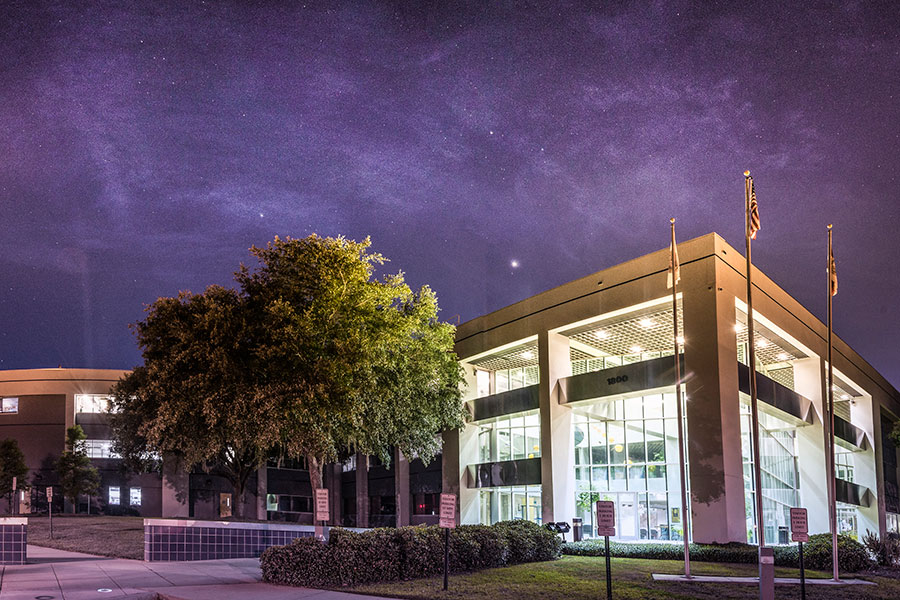
The National High Magnetic Field Laboratory is the largest and highest-powered magnet laboratory in the world.
The Florida State University-headquartered National High Magnetic Field Laboratory and the Tallahassee-based MagCorp have inked a five-year agreement to share resources and intellectual property rights in an effort to strengthen relationships between the university and private industry.
“This agreement is a wonderful opportunity for the experts at our National High Magnetic Field Laboratory to apply their skills to industry problems, while also helping promote economic development in our community,” Provost Sally McRorie said.
MagCorp was founded by a trio of current and former MagLab and FSU employees to leverage the unique capability of the MagLab to meet the demands of private industry. The company helps its clients tackle the risks associated with developing magnetic technology by breaking down larger ideas into smaller projects. As part of its agreement with FSU, MagCorp will work with MagLab experts to provide solutions for magnetically enabled technologies across many business sectors including medical technology, textiles, manufacturing, consumer products, and defense.
Any new technologies or techniques developed as a result of these projects would be patented and the intellectual property would be split among Florida State University, MagCorp and the client.
“The MagLab was created to solve the big scientific questions of tomorrow,” said Abby Queale, CEO of MagCorp. “MagCorp is putting the experts at this world-class facility to work on the problems industry faces right now. Our company is a huge advocate of the research being conducted by the MagLab and Florida State University. We see ourselves as a conduit for industry to access that expertise under this new model for technology development partnerships.”
The only facility of its kind in the United States, the National MagLab is the largest and highest-powered magnet laboratory in the world. The lab is a partnership among Florida State University, the University of Florida and Los Alamos National Laboratory and receives funding from the National Science Foundation and State of Florida.
MagLab scientists undertake a variety of complex research endeavors probing fundamental questions about materials, energy and life. The lab’s seven facilities offer a variety of tools and techniques for exploring physics, chemistry, biology and engineering in an interdisciplinary, collaborative environment. In addition to the scientists who work at the lab year-round, scientists from around the world reserve time on the lab’s record-breaking magnets to conduct their research.
MagLab Director Gregory Boebinger said the new agreement with MagCorp creates an expert-driven and proactive method for developing industrial relationships.
“The creation of MagCorp opens the door to new and dynamic industrial partnerships for the MagLab that are driven by applied science questions, while allowing the lab to stay focused on our core foundational research-driven user program,” said Gregory Boebinger, director of the MagLab.
The five-year partnership runs through 2025. Twenty-four experts and technicians, including 14 faculty members, have already begun working on projects related to a variety of areas such as sensors, orthopedics and textiles.
“We are very proud of the world-class faculty at the National High Magnetic Field Laboratory and are hopeful that through this agreement, we will be able to provide even more opportunities for them while also supporting the economic development of the Tallahassee area,” said Interim Vice President for Research Laurel Fulkerson.