Monday, November 13, 2017

FSU research team nets $8M grant to focus on students with learning disabilities


http://news.fsu.edu/news/education-society/2017/11/13/fsu-research-team-nets-8m-grant-focus-students-learning-disabilities/

A Florida State University-based research team studying the best ways to help students with learning disabilities has received an $8 million grant from the Eunice Kennedy Shriver National Institute of Child Health and Human Development.
Led by Richard Wagner, the Robert O. Lawton Distinguished Professor of Psychology and Eugenia and Russell Morcom Chair, the grant is to further research on dyslexia and other learning disabilities, to help train the next generation of scientists, and to do public outreach to ensure that research on these issues is making its way into the nation’s schools.
“Some of the research we’ve done already has helped children in schools, but we don’t think we’ve done all we can yet,” Wagner said. “That’s really going to be our focus as we reach out more to make a difference in the schools and for families.”
The $8 million grant will be spread out over five years and fund research at Florida State as well as several other partner institutions under Wagner’s lead including Haskins Laboratories, University of California at Irvine, University of California at San Francisco, University of Washington, Vanderbilt University, Purdue University, University of Oregon, Yale and Southern Methodist University.
The grant is a continuation of work that the Florida Learning Disabilities Research Center — housed within the Florida Center for Reading Research and the College of Arts and Sciences — has done for the past 10 years. The center has had 10 years of continuous funding from NICHD and this grant extends that another five years. It is one of only three NICHD Learning Disabilities Research Centers in the country.

Wednesday, November 8, 2017

Deion Sanders, FSU great


Jack M Silverstein‏ @readjack Nov 6

Monday, November 6, 2017

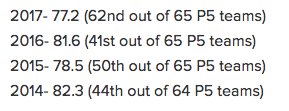
FSU's Pass Blocking Efficiency stacks up among P5 schools

How has Jimbo ignored this issue?  Don't hire friends and family because it clouds your judgement.


Brendan Sonnone‏ @BSonnone 5 minutes ago

Great job FSU fan base...


Brent Axe‏Verified account @BrentAxeMedia 4 minutes ago
Good to hear fans were treated well in Tallahassee


Sunday, November 5, 2017

10 win seasons last 25 years (1993-2017)


OXVT‏ @OX_VT 2 minutes ago
Hope head is still - Ton to play for still including th 10 Win Season during 25 year Bowl Streak - Nothing to at


Friday, November 3, 2017

Project Garnet

Another Seminole Booster development?


http://www.urbantallahassee.com/index.php/projects1/item/969-project-garnet


Location: 1607 Belle View Way, Tallahassee, FL 32304


Status: PROPOSED
Owner: Seminole Boosters, Inc.
Design: Nequette Architecture and Design
Contractor: Capstone Development Partners, LLC
Website: ONLINE
Value of Improvements:
ETA:
Description: Proposed for a vacant 7.58 acre parcel at the intersection of BelleVue Way and Hayden Road is the construction of a 192-unit (619) bed apartment complex with a 7,500 SF clubhouse. The development would include (50) 1-bedroom, (20) 2-bedroom, (12) 3-bedroom flats as well as (57) 4-bedroom and (53) 5-bedroom townhouses that will be rented on a per-bed basis. Buildings within this development expected to be 4-5 stories tall. The project site is zoned University Transition and is located within the Multi-Modal Transportation District.

https://www.google.com/search?source=hp&ei=Nq_8WcfYBoKKmQHW5YPQBA&q=1607+Belle+View+Way%2C+Tallahassee%2C+FL+32304&oq=1607+Belle+View+Way%2C+Tallahassee%2C+FL+32304&gs_l=psy-ab.3...940.940.0.2033.2.1.0.0.0.0.105.105.0j1.1.0....0...1.1.64.psy-ab..1.0.0.0...0.yxLIKaeGFsA

Thursday, November 2, 2017

FSU engineering professors win $1.7M NIH grant to search for stroke treatments


https://news.fsu.edu/news/science-technology/2017/10/31/fsu-engineering-professors-win-1-7m-nih-grant-search-stroke-treatments/

Two Florida State University researchers have received a $1.7 million grant from the National Institutes of Health to find new treatments for stroke.
In the United States, stroke is the fifth leading cause of death and one of the primary causes of disability, with more than 795,000 individuals experiencing an attack each year. But the only drug approved by the Food and Drug Administration has limited effectiveness.
Now, two researchers from the FAMU-FSU College of Engineering will focus their collective efforts on developing new treatments that could treat this complicated medical issue.
Samuel Grant, associate professor of chemical and biomedical engineering and director of the MRI user program at the FSU-headquartered National High Magnetic Field Laboratory, and Teng Ma, professor and chair of the Department of Chemical and Biomedical Engineering, will investigate how to use cells from bone marrow and fat tissue as a way to treat what’s called an ischemic stroke. This form of stroke occurs as a result of a blockage in a blood vessel supplying blood to the brain and accounts for about 87 percent of all cases, according to the American Heart Association. 
To date, a clot-busting drug called tissue plasminogen activator is the mainstay of stroke treatment, but it is only effective if administered within a short time after stroke onset and only for a small percentage of stroke patients.  
“Our long-term goal is to develop cell therapy technology for stroke treatment,” Ma said. “Specifically, we will develop technology that allows us to produce therapeutically competent cells as well as the ability to monitor their fate in the brain. The knowledge gained will help establish cell therapy as a viable technology in stroke treatment.” 
Researchers will look at cells called human mesenchymal stem cells that are found in both marrow and fat tissue. Grant and Ma believe that they can pretreat these cells and deliver them into the brain of patients who have experienced a stroke. 
These cells have attracted the attention of scientists and clinicians because of their potential for tissue repair and regeneration after migration to sites of tissue injuries, including damage in the brain. 
“Use of these preconditioned cells should increase their therapeutic effect and viability once transplanted in the stroked brain,” Ma said.
A major barrier, however, is that many of these cells die once transplanted, which greatly reduces the therapeutic benefits for stroke treatment. Additionally, the fate and transport of these cells to the stroke lesion are not well understood.
The joint effort of the investigators’ laboratories seeks to address these problems. Ma’s laboratory has developed a unique bioreactor system to enhance the cells’ survival rate after transplantation by preconditioning them as 3D aggregates or clumps, which have demonstrated improved viability and increased migration in cell cultures. Grant’s laboratory has developed techniques and instruments to take advantage of the sophisticated magnet technology at the National MagLab that can assess the efficacy of transplanted cells in a living organism.
They will use the world’s only 21.1 Tesla magnet, essentially a super-powered MRI, to track cells, observe the cells’ impact on metabolic and ionic recovery and assess the mechanisms that can be optimized to improve stroke outcomes.
“This machine provides the sensitivity and specificity to monitor the fate and transport of implanted cells over time while also letting us detect early markers for stroke recovery,” Grant said. “This will allow us to make critical decisions about how cells can be better prepared to treat stroke.”